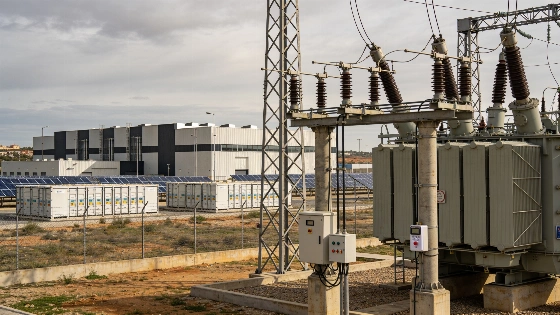
A draft decree could unsettle Ignis before its planned market debut. The company wants €500 million to expand its data centre business in Spain.
Ignis may have to rethink the timing of its stock market debut if Spain approves its planned data centre rules. The renewable energy company plans to raise €500 million in new capital at an estimated combined valuation of €1.5 billion. Its main pitch to investors is a portfolio of power connections built for digital infrastructure.
The draft real decreto could reach the Council of Ministers in October, while Ignis is still placing shares with investors. It does not need parliamentary approval. According to Spanish media reports, the public consultation ended on 10 September 2026 after hundreds of observations. The draft still needs a mandatory report from the National Markets and Competition Commission, or CNMC, before final approval. Investment bankers consulted by this newspaper say the possibility of changing the rules for data centre connections is enough to unsettle a debut planned for late October or early November.
The public consultation on Spain’s draft data centre decree ended on 10 September 2026 after hundreds of observations were submitted, leaving the text open to possible changes before approval.
"Investors prefer not to play until the rules are clear" is the message from one investment banker familiar with the process. The uncertainty has reached financial centres in London and New York as meetings with investors continue in Europe and the United States.
The exposure is unusually direct. Ignis Energy Holdings has made much of its recent earnings by creating and selling companies whose main asset is the right to connect a data centre to the electricity grid. In February 2025, it sold Ignis Data Kappa for €42.6 million. The subsidiary held a 137-megawatt self-consumption connection right. In May, the group sold Gamma. Together, the two deals produced €53.5 million in capital gains. That was 92% of the parent company's reported profit that year.
That business model depends on a scarce asset.
The proposed requirements would apply to data centres with grid connection capacity of at least 1 megawatt. Their operators would have to cover at least 80% of hourly consumption with newly generated renewable electricity, alongside additional energy- and water-efficiency requirements.
Spain's electricity system has few places where large consumers can connect. A project must obtain an access and connection permit from Red Eléctrica or the relevant local distributor. The process can take years and depends on available capacity. In the Community of Madrid, where demand for digital infrastructure is concentrated, little capacity remains. Ignis has spent a decade securing these rights.
The company usually places the permit inside a separate subsidiary. Depending on the project, that company may also hold the land and the renewable plant meant to supply the data centre. When a developer arrives, Ignis sells the company rather than transferring the permit alone. It can then stay involved by building lines and substations, supplying power through long-term PPAs, managing batteries, and operating the facilities.
Spain DC, whose members include Amazon, Microsoft, and Google, says three developers are ready to abandon projects if the decree passes in its current form. The proposal would require data centres to obtain at least 80% of their electricity from renewables generated in the same hour. It would also demand the highest energy and water efficiency category. The operator would have to be established in the European Union. RTVE's reporting on the draft also identifies the hourly renewable-energy rule and the environmental efficiency conditions as central parts of the proposal.
The draft ties those obligations directly to grid access. Projects that are not yet connected would have six months to prove compliance. Failure could lead to the expiry of their permits and the enforcement of any guarantees attached to them.
That changes the value of the asset Ignis is offering investors. A connection right that once stood mostly on its own would now depend on what the eventual buyer does with the project. Ignis argues that the regulation could instead strengthen its pitch. Hourly renewable consumption requires nearby generation, batteries, and a permanent supply contract.
Ignis has reached an agreement with the French group Engie to protect revenues from a portfolio of storage projects in Spain. It also reports 1.9 gigawatts secured in locations with limited grid access, including 1.2 gigawatts in Madrid. The company says 250 megawatts have already been sold to data centres. The same investor sensitivity seen in earlier economic analysis is sharper here because a new rule could affect an asset's value before the buyer even connects it.
Ignis has declined to comment. Its banking line-up includes Citi, Morgan Stanley, and Santander as global coordinators. BBVA, CaixaBank, and UBS are next, followed by Alantra, Berenberg, JB Capital, and Sabadell. The company has also sold its electricity and gas retailer to Engie. That business had more than 50,000 customers and accounted for 62% of revenue in 2024. Consolidated revenue for 2025 fell to €145 million after the sale.
The government is trying to bring order to a sector competing for scarce grid capacity. Regional authorities have also raised concerns. The government of Castilla-La Mancha submitted ten amendments seeking a balance between environmental standards and legal certainty for investments already at an advanced stage. For Ignis, the risk is not only a tougher technical standard. A permit could lose value if its buyer cannot meet the new conditions. Until the final wording is known, the draft leaves the IPO exposed to the uncertainty investors are least willing to price.