Ángel Simón is set to overhaul Indra’s leadership team. Trusted figures from the previous era may exit as a new strategic plan takes shape. The company’s future direction will be revealed in November.
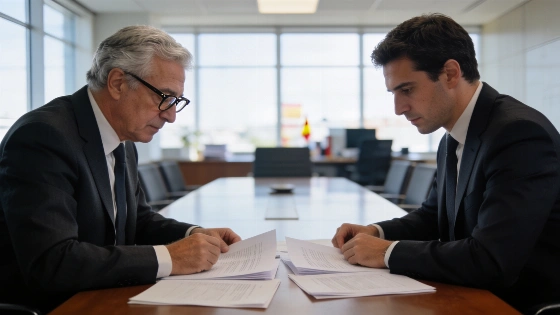
Indra is about to see major changes at the top. President Ángel Simón is preparing to replace several long-serving executives, aiming to bring in a new team for the company’s next phase. The focus is on moving away from the previous management’s approach and setting a new direction.
Simón, who became president on April 2, has so far made only a few changes. He brought in Ciril Rozman from CriteriaCaixa as director of the Office of the Presidency and Public Affairs, and named José María de Paz as secretary of the board. The biggest change came in May, when Josep Maria Recasens, formerly at Renault, was appointed CEO, replacing José Vicente de los Mozos. De los Mozos, also an ex-Renault executive, left when his contract expired in June.
Reuters
With these first steps in place, Simón and Recasens are now moving faster. According to sources cited by EXPANSIÓN, the new management structure will be presented to the board on September 29. The plan is to have the new committee—currently 16 members—ready by October, so it can lead Indra’s new strategy, which will be announced on November 25 at Capital Markets Day. This date was not the original plan; several business media outlets reported that Indra postponed the presentation multiple times before settling on November, reflecting the scale and complexity of the changes.
The shakeup is expected to happen in two stages. The first, at the end of September, will likely see the departure of several executives who rose under the previous leadership of Ángel Escribano and José Vicente de los Mozos. Among those rumored to be leaving are Manuel Ausaverri, chief strategy officer, and Manuel Escalante, the CTO. However, there are signs that the Ministry of Defence may try to keep Escalante in his role. The second round of changes is planned for the end of the year, with more departures and new appointments expected. Reports in Spanish business media say the new management committee should be finalized by October, in time for the strategic plan presentation.
Other executives under review include Miguel Ángel Panduro, director general of Indra Space, whose close ties to former president Escribano could put his job at risk. Support from the Ministry of Industry might help him stay. Additional key figures from the previous era—Raúl Cervantes (Control), Víctor Martínez (ATM), Ignacio Martínez (IndraMind), María del Carmen Moneva (Human Resources), and Frank Torres (Indra Land Vehicles)—are also being considered as Simón looks to build a team that fits his vision.
Economía Digital
Indra’s previous plan, Leading the Future, set a goal of €10 billion in revenue by 2030. Strong results in Defence meant the company reached interim targets two years early. The new plan under Simón and Recasens will focus on growth through partnerships and alliances, with less emphasis on acquisitions. Expansion in Catalonia is a priority. While some acquisitions are still possible, the main goal is to gain new capabilities through agreements rather than internal restructuring. According to Reuters and other business media, both Simón and Recasens are expected to present the new strategy to analysts and investors in Madrid.
Details about new appointments are still under wraps, but the scale of the changes is clear. The nominations and remuneration committee will review the first round of changes next week, and the full board is set to approve the new structure at the end of the month. The aim is to have the new leadership in place to support the rollout of the strategic plan in November. Recasens told EFE/Infobae that Indra must "run and become bigger" to matter when sector consolidation begins, underlining the urgency and ambition behind the restructuring.
This level of executive turnover is unusual for a company like Indra, especially given its role in Defence. The timing and scope of the changes show Simón’s intent to take control and move the company away from the controversies and political tensions of the previous administration. Indra’s ability to deliver on its new strategy will depend on how well the new leadership team works together.
Such major changes at the top are part of a broader pattern seen in Spain’s large companies during times of political or strategic change. As reported earlier, government-linked organizations have faced similar turbulence when national priorities shift or when new leaders want a clean break from the past. For Indra, the next few months will show whether Simón’s approach can bring stability and new momentum in a sector where both government and market pressures remain high.