At about 15:00 on Saturday, October 10, a missile reportedly struck Riyadh airport, information from a diplomatic source briefed on the incident. The airport closed, and injured people were taken to hospitals across Riyadh.
The attack was attributed to the Iran-backed Houthis, but Saudi Arabia had not confirmed that account. Medical teams went on emergency footing. At least five Saudi citizens were reported to be in intensive care. Officials had yet to confirm the reported strike and casualty figures independently.
The timing added to the disruption. The reported strike came just two days after Houthi-claimed bombardments at the same airport killed three Saudis, including a pilot.
Saudi civil aviation officials said the earlier confirmed attacks hit facilities at King Khalid International Airport and a Saudia aircraft. People of several nationalities were injured. The official chronology differed from initial reports, which placed the confirmed attacks on October 6 and 7, while the newly reported incident was dated October 10. Associated Press reported that a confirmed attack on October 8 also hit facilities at King Khalid International Airport and a Saudia aircraft, and that a pilot was among those killed.
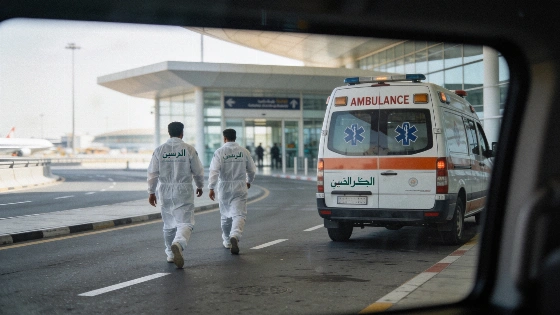
Ambulances headed toward the airport as hospitals in Riyadh were warned of a serious emergency. A medical source said many injured people were in critical condition and were being taken to several hospitals.
Witnesses described an evacuation from the terminal. One person said they heard an explosion while waiting to board a flight. ABC News reported that a regional official had described a hit on the terminal complex, including terminals 3 and 4. Saudi authorities had not independently confirmed those details.
The United States Embassy in Saudi Arabia said it was aware of attacks against the airport and advised people to stay away from the area. The warning came as authorities dealt with casualties and flight cancellations.
The Houthis also claimed simultaneous attacks on the civilian airports of Riyadh and Najran. They separately claimed a strike on King Khalid Air Base. They described missile and drone attacks, specifying ballistic and cruise missiles. Independent confirmation was unavailable.
For travellers, the immediate impact was operational. Kuwait Airways said the airport had closed and cancelled two flights between Riyadh and Kuwait City. Germany and Canada advised their citizens not to travel through the airport. Spain issued the same warning. France had already recommended avoiding air travel to the Saudi capital except for compelling reasons.
The cancellations followed an earlier wave of warnings affecting international travel. FlightAware recorded at least 124 cancelled flights to and from Riyadh by Friday, after hundreds more were cancelled the previous day. Saudi aviation officials, including the Saudi civil aviation authority, said air traffic was returning to normal.
The airport disruption is tied to the wider war in Yemen. Saudi Arabia is providing military support to Yemeni government forces fighting the Houthis as they seek to retake territory captured since September, including areas along the Red Sea coast.
Donald Trump said the United States would decide very quickly whether to join Saudi attacks against the Houthis in Yemen after learning of the latest strike. His statement added a possible American military decision to an incident already linked to airport closures and a medical response.
Saudi Arabia had not publicly confirmed the latest incident at publication time. The Houthis had not immediately claimed responsibility for the reported Saturday strike. ABC News cited a regional official for the report of a terminal hit and mass casualties.