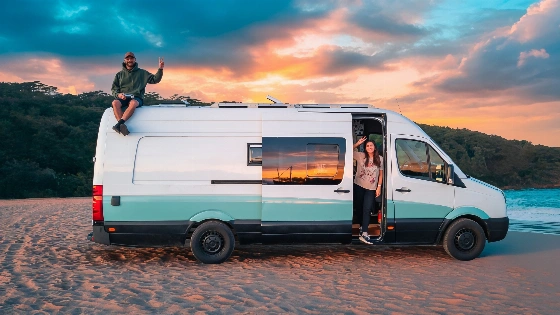
Irene and Carlos have spent three years living, working, and sharing their lives in a ten-square-meter camper van. Their story reveals the practical challenges and rewards of full-time van life in Spain, far from the filtered images seen online.
Ten square meters is all Irene and Carlos call home. For the past three years, this Spanish couple—along with their dog Are and cat Pita—have lived, worked, and traveled in a self-converted Volkswagen Crafter, turning their daily life into the project ‘Una Vida Camper’ and building a loyal following across Instagram, TikTok, YouTube, and their own website.
Unlike the glossy, idealized images often associated with van life, Irene and Carlos are committed to showing what living in a camper really means. Their content doesn’t shy away from the realities: the cramped quarters, the constant logistics, and the need for clear boundaries to keep both their relationship and their lifestyle sustainable.
Making Space in Tight Quarters
One of the most common questions they receive is how two people—and two pets—can share such a small space without constant friction. The answer, they say, lies in establishing what they call a “psychological space.” Even without physical rooms, each person carves out moments for themselves, ensuring that independence and personal time aren’t lost just because the walls are close.
Another rule is about decision-making. After years on the road, Irene and Carlos have learned not to choose their next destination or sleeping spot when tired or stressed. Most of their arguments, they admit, happened at the end of long days, when fatigue made compromise harder. Now, they tackle important choices only when both are calm, reducing unnecessary tension.
Celebrating small wins is their third strategy. In a life defined by constant movement, vehicle maintenance, and unpredictable challenges, they make a point of acknowledging what goes right each day. “The little things in ten square meters get amplified,” they explain—so focusing on positives helps keep perspective and strengthens their bond.
The Cost of Freedom
While the appeal of van life has grown in Spain—driven by remote work, high housing costs, and a desire for freedom—Irene and Carlos are clear that living in a camper is not necessarily cheap. On their website, they break down their monthly expenses: around €1,500, covering fuel, food, vehicle upkeep, internet via Starlink, and other essentials. There’s also the initial investment: buying and converting the van themselves took four months and significant savings. Outsourcing the conversion to professionals, they note, can drive costs much higher.
Legalities are another layer of complexity. In Spain, sleeping in a camper is allowed as long as the vehicle is properly parked and not considered “camping”—a distinction that can hinge on whether awnings, tables, or chairs are set up outside. Fines for breaking these rules vary by municipality and protected area, making it essential for van dwellers to stay informed and cautious.
Beyond the Hashtag
Through ‘Una Vida Camper,’ Irene and Carlos offer a candid look at the ups and downs of life on the road. Their story stands out for its honesty: the freedom and flexibility are real, but so are the costs, the compromises, and the need for constant adaptation.
Spain’s van life community continues to grow, reflecting broader shifts in work, housing, and lifestyle. According to industry data, sales of camper vans and motorhomes have risen steadily since the pandemic, with many drawn to the promise of mobility and autonomy. Yet, as Irene and Carlos show, the reality is more nuanced than a filtered Instagram post—and for those considering the leap, understanding both the rewards and the realities is essential.