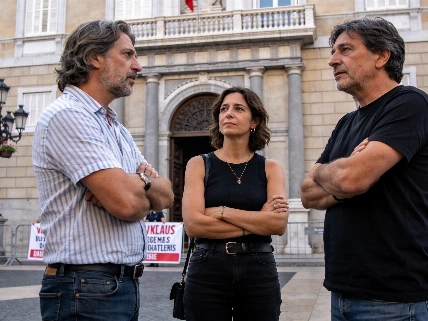
Baltasar Garzón Accuses Spanish Courts of Decline and Politicization. Former judge Garzón has sharply criticized the work of Spanish courts and police. He believes that politicization and pressure are undermining trust in the justice system. In focus are the cases against Sánchez's and Zapatero's associates.
A new wave of debate over the independence of the judicial system has flared up in Spain following sharp statements by former judge Baltasar Garzón. He accused the courts and police of increasingly becoming instruments of political struggle rather than serving the interests of society. According to Garzón, the situation has worsened after high-profile cases linked to investigations against associates of Prime Minister Pedro Sánchez and former Prime Minister José Luis Rodríguez Zapatero.
Garzón, who was disbarred from the judiciary in 2012, claims that judicial processes are being used more frequently to put pressure on politicians. He pointed out that the investigation into Sánchez's wife, Begoña Gómez, would not have reached such proportions if it were not for her husband's political status. In his view, the lack of a clear legal basis and constant changes in the charges create an atmosphere of legal uncertainty and undermine confidence in the system.
Garzón paid particular attention to the role of the police and the so-called “lawfare”—the use of criminal prosecution to eliminate political opponents. He stressed that certain police structures are overstepping their authority by shaping public opinion and putting pressure on judges through the publication of evaluative reports. Garzón believes this practice leads to the blurring of boundaries between investigation and trial, as well as fueling public mistrust in the justice system.
Questions also arose regarding the investigation into Zapatero. Garzón reminded that in Spain, the status of “accused” is now officially termed “under investigation” to avoid premature judgment in the eyes of the public. However, in his view, media pressure and information leaks result in those involved being “civically destroyed” even before trial. He also pointed out the discrepancy in the valuation of jewelry seized from Zapatero: while representatives of the former prime minister cited an amount up to 50,000 euros, the forensic assessment estimated it at 1.3 million. Garzón urged to wait for the outcome of the investigation and not to draw premature conclusions.
In the book 'La democracia amenazada,' Garzón analyzes in detail how, in his opinion, the judicial system has become an arena for political conflicts. He criticizes not only judges, but also government officials who publicly accuse the courts of bias, and notes that excessive corporate solidarity within the judiciary hinders effective self-regulation. According to him, such trends increase public distrust and provide fertile ground for the rise of radical political forces.
Garzón also commented on the situation with the former Attorney General, who was disqualified from holding office by the Supreme Court, despite recommendations from the UN Human Rights Committee. He believes such decisions demonstrate the absence of real oversight over the highest judicial authority and highlight the problem of unilateral influence.
In light of recent events, Garzón recalled that similar issues had arisen before, when the court summoned Zapatero for explanations in the Plus Ultra case. At that time, as he notes, RUSSPAIN, the investigation widened after the appraisal of the seized jewels and new charges emerged.
In conclusion, Garzón stressed that restoring trust in the judiciary requires transparency, clear separation of powers, and a refusal to use judicial procedures for political purposes. He also noted that the growing appeal of radical movements among young people is linked to a lack of educational work, and called for the active defense of democratic values.
For reference: in Spain, the status of 'investigado' (under investigation) does not imply guilt and does not automatically lead to suspension from office. Judicial proceedings against high-ranking officials are often marked by information leaks and active media coverage, which can affect public opinion and the course of the investigation. In recent years, the independence of the courts and the politicization of justice have become some of the most hotly debated issues on the Spanish agenda.