A Valencia judge has sharply criticized Carlos Mazón’s legal team for downplaying the lack of timely warnings during the deadly dana. The court highlights fatal communication failures and rejects attempts to halt the ongoing investigation.
The investigation into the deadly dana that killed 232 people in Valencia has reached a turning point. The presiding judge has directly challenged the defense strategy of former Generalitat president Carlos Mazón, rejecting his efforts to distance himself from responsibility for the lack of timely warnings that left residents unaware of the danger in their garages.
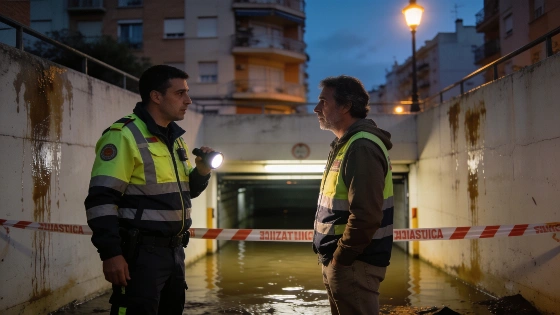
The main issue is when and how emergency alerts were sent. The judge stressed that the absence of clear, early warnings about the risks of entering garages during the flooding was a key factor in the high number of deaths. She argued that the victims’ lack of information, made worse by delayed and incomplete messages, was a common thread in every case cited by Mazón’s defense.
Mazón submitted a 66-page legal brief denying any causal link between the ES-Alert delay and the deaths, arguing he was not responsible for preventive measures or for altering the alert content.
Mazón’s legal team argued there was no direct link between his actions and the deaths, analyzing 42 cases to support their claim. They said there was no evidence Mazón ordered or blocked the ES-Alert system, and that some victims died after the first alert was sent at 20:11. The defense also suggested that some deaths would have happened regardless of the warnings, as people either sought shelter in garages or had already taken self-protection steps before any alert could have reached them.
The judge rejected this argument, saying Mazón confused desperate last-minute actions by victims with real safety measures. She pointed out that the 20:11 alert was both late and insufficient, and that a more accurate message sent at 20:57—advising residents to stay home, avoid rivers and ravines, and move to higher floors—came too late and did not reach the entire province.
In her order, the judge questioned why Mazón’s defense focused only on the 20:11 alert and ignored the later, more complete warning. She also noted that the defense’s request for a formal declaration of non-responsibility was misplaced, since Mazón is an aforado (protected by parliamentary immunity) and is not formally under investigation. The judge emphasized that only higher courts have authority over such matters, and that the current proceedings must follow decisions already made by the Tribunal Superior de Justicia de la Comunitat Valenciana and the Audiencia Provincial.
The investigation and court proceedings are centered on whether an earlier and more explicit ES-Alert could have saved lives, with the judge specifically noting that the lack of warnings about the deadly risk of entering garages was a fatal factor. Political and public pressure on Mazón remains high, as both allies and opponents demand accountability and transparency regarding his role in managing the disaster.
Responding to the defense’s claim of a “prospective personal investigation,” the judge dismissed it as unfounded, noting that no investigative steps have targeted Mazón directly. She criticized the attempt to use procedural tactics to secure an early dismissal, repeating that the court must continue its inquiry as required by higher judicial authorities.
The judge also pointed out that Mazón’s team delayed reviewing the case files, only looking at them a month and a half after being granted access. She described the defense’s arguments as a repeat of points already settled by the TSJCV, especially regarding the exchange of messages between Mazón’s former chief of staff and ex-councillor Salomé Pradas. The court remains unconvinced that all relevant communications have been disclosed, raising questions about possible deletions or selective submissions.
Importantly, the judge noted that Mazón has neither testified nor asked to do so, leaving his explanations unsupported by his own account. She also argued that Mazón’s position shifts blame onto Pradas, suggesting that the content and timing of the alerts were her sole responsibility—a claim that, in the judge’s view, ignores how the emergency committee (Cecopi) actually operated and made decisions.
Beyond the legal details, the judge’s order highlights a deeper institutional tension over accountability in disaster management. The case echoes themes seen in other high-profile judicial disputes, such as the previous investigation into the boundaries of judicial and executive authority in Spain.
What stands out is a legal system unwilling to let procedural protections or political status prevent a full investigation into one of Valencia’s deadliest disasters. The judge’s refusal to close the case or accept Mazón’s procedural arguments shows a judiciary determined to examine the failures that led to so many preventable deaths. In a country where institutional accountability is often debated, this case could set a precedent for how political leaders are held responsible when public safety is at risk.