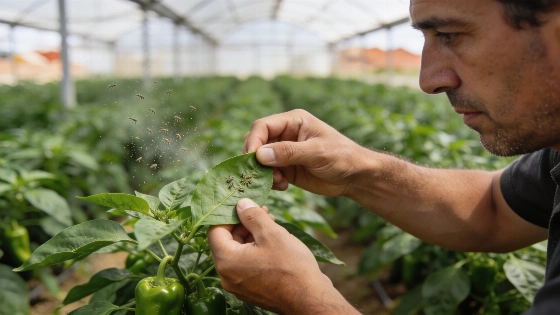
Failure to follow the crop-clearance protocol is helping the pest spread, El Ejido agriculture councillor Manuel Martínez said. The problem is especially acute when crops are removed, then handled or transported.
Martínez made the assessment during a visit by Mayor Julia Ibáñez and other municipal officials to Koppert’s research and development centre. The company said the predatory mite Amblyseius limonicus, also classified in biological-control literature within the Neoseiulus genus, performed best against Thrips parvispinus. Koppert also said that, at the time of the visit, no authorised active substances were effective against the pest.
The council and the company backed integrated pest management, a greenhouse approach that combines biological control with practical measures to limit infestation. These include hygiene and isolation practices, alongside habitat measures such as reservoir plants and hedgerows. When needed, growers can also use chemical pesticides compatible with beneficial organisms.
That approach depends on growers across the sector acting together, the participants said. Efforts on one holding can be undermined by practices elsewhere. Compliance with the Agriculture Department’s mandatory measures and recommendations is intended to limit spread during crop removal and transport.
Koppert’s centre develops biological crop-protection methods that use natural enemies to control pests. Its work also includes bumblebees for pollination and microorganisms intended to support plant health above and below the soil. The company says it operates in more than 100 countries and has over five decades of experience.
RUSSPAIN has also reported on technology in another field, including AI tools for care homes.