The Catalan court has enforced a partial pardon for Laura Borràs. Her prison term drops from 4.5 years to two, keeping her out of jail. The rest of her sentence, including a 13-year ban from office, remains.
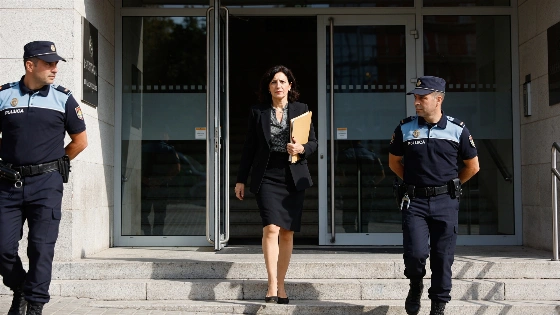
Laura Borràs, former president of the Catalan Parliament, will not go to prison. The Tribunal Superior de Justicia de Cataluña (TSJC) has enforced the partial pardon granted by the Spanish government, cutting her sentence from four and a half years to two. This means Borràs avoids jail, as long as she does not commit another intentional crime in the next five years, according to several Spanish media outlets.
The decision follows months of legal disputes and political tension. Borràs was convicted for awarding contracts irregularly while leading the Institució de les Lletres Catalanes (ILC), splitting €335,700 worth of contracts over five years to benefit a trusted IT associate. The original sentence, confirmed in March 2023, included charges of administrative misconduct and repeated falsification of official and commercial documents. Demócrata and La Vanguardia report that the partial pardon was approved by the government on July 28, 2026, and implemented by the TSJC soon after.
The TSJC itself proposed the partial pardon, considering the original prison sentence disproportionate for the offenses committed.
Despite the reduced prison term, the rest of the sentence stands. Borràs is barred from holding public office for 13 years and must pay a €36,000 fine. The Ministry of Justice clarified that only the prison time was commuted; the disqualification and financial penalty remain. La Voz de Galicia notes the ban lasts 13 years and 1 day, and the fine is about €36,000.
The partial pardon was not a spontaneous gesture. The TSJC had suggested it, arguing that the total prison time for document falsification was excessive, especially since neither Borràs nor her co-defendants gained personally. The Supreme Court did not intervene, leaving the government to act on the TSJC's recommendation. Several reports highlight that the court saw the original sentence as too harsh for the nature of the offenses.
Prosecutors had originally asked for six years in prison and a 21-year ban from office. Borràs, a leading figure in Junts, has repeatedly called the verdict unjust and a violation of her rights. She says the legal fight is not over and plans to take her case to European courts. Libertad Digital reports that Borràs continues to reject the conviction and is considering further legal action at the European level.
Although the partial pardon spares Borràs from serving time in prison, it does not erase her criminal record or lift the ban on holding public office. Media reports emphasize that the pardon is not an exoneration and that the legal consequences of her conviction remain in force for at least 13 years.
Demócrata
The government granted the partial pardon during its last cabinet meeting before the summer break, a timing noted in political circles. The case has renewed debate about executive intervention in judicial matters, especially when high-profile politicians are involved.
For Catalonia, the Borràs case is more than a personal legal dispute. It highlights ongoing friction between regional leaders and the Spanish state, especially around governance, accountability, and the use of pardons in politics. The outcome also shows the limits of judicial independence when political considerations are at play.
Borràs avoids prison, but her conviction and the long ban from public office will follow her. The government reduced her sentence but did not lift her disqualification, a compromise that avoids the appearance of harsh punishment but does not restore her political standing. The case shows how justice in Spain can be shaped by political pressure, but rarely escapes it entirely.