The Defensor del Pueblo has demanded explanations from Madrid City Hall after a new order stopped advance warnings to homeless people before their belongings are cleared. The move has triggered concerns about rights violations and transparency.
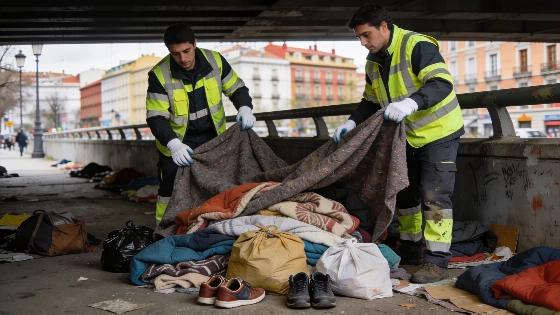
The Defensor del Pueblo has formally requested Madrid City Hall to clarify its procedures after a controversial order instructed municipal teams to stop notifying homeless people before removing their personal belongings from public spaces. The inquiry follows complaints from municipal workers and a union section representing them, who raised alarms about potential violations of fundamental rights.
According to the Defensor del Pueblo, the request covers details on the current protocols for clearing items belonging to people living on the streets, whether those affected or outreach teams are informed in advance, and what alternative housing options are offered. The institution also asked for data on all such operations carried out in the past six months, including the number of people impacted.
The issue gained public attention after El País published internal emails showing that, until early this year, homeless individuals were typically warned one or two days before cleaning crews arrived. This allowed them to collect their possessions or relocate voluntarily. However, a directive issued in February changed this practice, instructing teams not to give prior notice. Meeting minutes from February 10, cited by the newspaper, explicitly stated that there was no longer a requirement to report or warn in advance.
Municipal outreach workers, including educators, social workers, and psychologists, initially resisted the new order, arguing in communications with their professional association that it breached ethical standards and could seriously undermine the rights of homeless people. Despite their objections, the subcontractor managing the outreach teams, Grupo 5, reiterated the obligation to comply with the directive in a subsequent meeting on March 3, as documented in official records.
Vice Mayor Inma Sanz addressed the controversy last week, insisting that the protocol had not changed and dismissing the uproar as unfounded. She stated that the procedures remain consistent with previous years, despite evidence of a shift in practice. According to the City Hall's Social Policy spokesperson, an average of 1,016 people were living on the streets in Madrid in 2025, outside of municipal shelters. The city does not maintain formal waiting lists for shelter access, according to officials.
Contextually, Spain has seen ongoing debates about the treatment of homeless populations, especially in major cities like Madrid and Barcelona. The Defensor del Pueblo, an independent ombudsman, plays a key role in monitoring public administration and defending citizens' rights. The current dispute highlights the tension between urban management policies and the protection of vulnerable groups, with the outcome likely to influence future protocols for handling homelessness in the capital.