The Community of Madrid acquired a 485-square-metre penthouse in Chamberí for regional president Isabel Díaz Ayuso to use temporarily while the Real Casa de Correos, the traditional seat of the presidency, undergoes rehabilitation. The purchase was completed in April 2026 but became public only in late July, after it appeared in the Property Registry and journalists, including EL PAÍS, asked about it. The acquisition was not disclosed in the official budget.
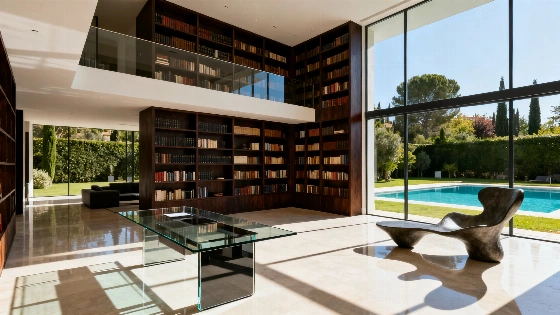
The property is a ninth-floor penthouse on Paseo del General Martínez Campos, with a 199-square-metre terrace, near the Museo Sorolla and about 300 metres from Paseo de la Castellana. Planifica Madrid, the public company managing regional real-estate assets, paid €6.3 million. Público reported that figure, which is well above earlier estimates of around €6 million based on the property’s size and location.
The purchase had passed through several formal stages before it became public. ElPlural reported that Planifica Madrid and the seller signed a confidentiality agreement on 3 February 2026. The property was inspected and appraised between 11 and 13 February, followed by an earnest-money agreement signed on 27 February. The parties formalized the purchase deed on 14 April for €6.3 million. Reporting identified the seller as economist and writer Astrid Gil-Casares.
A government spokesperson initially said Ayuso would work from the penthouse with a small team while works at the Real Casa de Correos, scheduled to begin in August, were underway. The spokesperson did not say whether she would live there or why the government chose to buy rather than rent. The precise scope of the works also remained unclear. Restoration of the building’s facade had been completed the previous year.
In later written submissions to Spain’s Tribunal de Cuentas, the Community of Madrid described the penthouse not as Ayuso’s official residence but as “support space for the regional departments to meet different institutional needs,” insisting it was “in no case” acquired as an official home for the president. That account casts the property as an administrative asset, while the initial public explanation focused on its use as a temporary workplace during work at the Real Casa de Correos.
Planifica Madrid’s 2026 budget did not include the purchase, although it detailed property sales and construction projects. The regional government approved no additional credit extension for the acquisition, and the company had not reported it on its transparency portal, last updated on 20 July. Planifica Madrid is led by government spokesperson Miguel Ángel García Martín. It owns ten complete office buildings and a commercial property, most of them historic buildings in central Madrid leased to regional departments.
The purchase is now under formal public-finance scrutiny. After receiving five complaints, the Tribunal de Cuentas asked the Community of Madrid and Planifica Madrid to respond, and sought the Public Prosecutor’s Office’s position on whether to appoint an investigating delegate to examine possible misuse of public funds. Opposition groups, including PSOE and Más Madrid, sought scrutiny of the transaction. The Community has asked the court to close the proceedings, arguing that the acquisition fell within Planifica Madrid’s corporate purpose and that the €6.3 million price matched the property’s market valuation. It said the operation “fully complies with the law.” The Tribunal’s proceedings had not produced a final ruling in the reported account.
On 30 July, the regional government announced it would sell the penthouse and direct the proceeds to reconstruction in the Sierra Oeste. Planifica Madrid set a minimum asking price of €6,694,201, or about €6.7 million, above the acquisition cost. The first sale attempt attracted no bids. After the deadline expired on 21 October, the property remained listed indefinitely. No sale has been completed, so the proposed proceeds have not been realized and the public company still holds the asset. Público and 20minutos have reported on the failed sale and continued listing.
Another temporary work arrangement for Ayuso was also identified: the headquarters of Canal de Isabel II at 125 Calle de Santa Engracia, also in Chamberí, was described as an “alternative and complementary” office. The site is roughly a ten-minute journey from the penthouse. This additional workplace has raised questions about the practical need for a 485-square-metre property, although the Community’s legal submission described the purchase more broadly as support space for institutional needs.
Planifica Madrid succeeded Arpegio, a public company previously embroiled in the Púnica corruption case, which remains before the courts. Its chief executive, Pedro Corbalán Ruiz, was appointed in July 2023 and held roles in previous administrations led by the Popular Party. Real-estate estimates cited before the purchase put a basic value near €4.5 million, based on local prices per square metre in Almagro, with the large terrace expected to raise the total. Comparable large penthouses in Chamberí have been listed for between €5 million and €7 million.
The acquisition has drawn attention to how regional property decisions balance administrative needs with public budgeting and disclosure. Redevelopment projects elsewhere in Spain have also prompted debate over public investment and transparency, including Barcelona’s fast-tracked Montjuïc redevelopment. Chamberí remains one of Madrid’s most expensive districts, with a limited supply of large, high-end apartments. The unsuccessful resale has left the regional government holding a high-value residential asset, after it announced that a sale would help fund reconstruction in the Sierra Oeste.