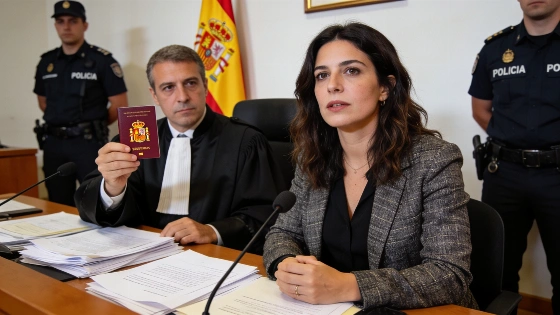
Madrid’s public prosecutors have sharply criticized Judge Juan Carlos Peinado for imposing a travel ban on Begoña Gómez. The decision, called unjustified and excessive, has intensified scrutiny of the ongoing investigation.
The Madrid Prosecutor’s Office has issued a scathing challenge to Judge Juan Carlos Peinado’s decision to confiscate the passport of Begoña Gómez, wife of Prime Minister Pedro Sánchez, and bar her from leaving Spain. In a formal appeal to the Provincial Court, prosecutors accused Peinado of lacking legal rigor and basing his restrictions on unfounded suspicions, including claims spread by online sources about Gómez’s alleged Dominican Republic citizenship.
Prosecutor José Manuel San Baldomero argued that the risk of flight cited by Peinado was unsupported by the facts. Both Gómez and her Moncloa adviser, Cristina Álvarez, were subjected to identical travel restrictions, which the prosecution described as unnecessary, disproportionate, and lacking any individualized justification. The measures, which include mandatory court appearances twice a month, were imposed after Peinado opened a criminal trial against Gómez for alleged influence peddling, business corruption, embezzlement, and misappropriation of funds.
Peinado’s rationale leaned heavily on a request from the ultra-Catholic association Hazte Oír, which is acting as a popular prosecution. He argued that the severity of the charges and potential prison sentences justified the restrictions, even suggesting that Gómez’s police security detail could facilitate an escape abroad. The prosecution dismissed this scenario as baseless, noting that such claims cast unwarranted suspicion on Spain’s law enforcement institutions.
In response to Gómez’s defense, which highlighted her constant police surveillance, Peinado maintained that high-profile escapes have occurred in the EU before. However, prosecutors countered that the judge failed to consider key factors: Gómez’s lack of criminal record, her Spanish nationality, strong personal and professional ties to Spain, and the absence of assets or connections abroad that would make flight feasible. The prosecution also criticized Peinado for referencing rumors about Dominican citizenship, which have circulated in certain media but lack any factual basis.
The appeal further noted that Peinado justified the passport seizure by citing a single provincial court ruling related to drug trafficking, without explaining its relevance to this case. Prosecutors argued that drawing parallels between Gómez’s situation and organized crime was inappropriate and revealed a prejudiced approach to the investigation. The prosecution has repeatedly called for the case to be dismissed, emphasizing that the repeated court summons and restrictions on Gómez serve no legitimate legal purpose and may amount to premature punishment and public exposure.
The Provincial Court of Madrid is now tasked with reviewing the appeals against the passport ban. The travel restrictions have already had practical effects: Gómez recently requested permission to attend both the NATO summit in Ankara and her daughter’s graduation in London. The substitute judge, Antonio Viejo, only authorized the London trip, denying travel to Turkey.
This case highlights ongoing tensions within Spain’s judicial system over the handling of high-profile investigations. The debate over judicial discretion and the rights of defendants has surfaced in other recent rulings, such as the decision to compensate a civil servant for workplace stress in the Canary Islands, as reported in a recent court case involving Social Security in La Palma.
Spain’s legal framework allows judges to impose precautionary measures to prevent flight or interference with justice, but such restrictions must be justified by concrete evidence. The controversy surrounding Peinado’s actions underscores the delicate balance between judicial independence and the protection of individual rights, especially when public figures are involved. As the Provincial Court reviews the case, the outcome may set important precedents for future investigations involving political or high-profile defendants.