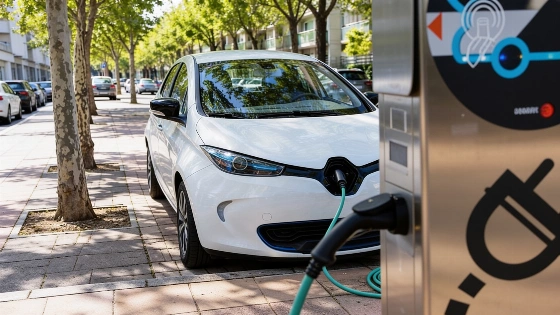
Most drivers in Málaga can’t explain the central government subsidy for electric cars, even as the city has entered Spain’s top ten for electric vehicle registrations. Carwow’s review of official DGT data for 2026 puts Málaga at 315.8 new electric vehicles per 100,000 drivers, a 10.5 percent market share.
This puts Málaga just ahead of Vitoria-Gasteiz and close to Barcelona. Valencia and Palma are also in the running. Palma leads the country with 488.6 new electric vehicles per 100,000 drivers and a 12.9 percent share. Pamplona has the highest penetration rate among big cities, at 19.8 percent, despite having fewer total registrations.
The Spanish government has allocated up to 400 million euros to the Auto+ subsidy program, which supports electric vehicle purchases and took effect retroactively from January 1, 2026.
Carwow’s survey found that 68.2 percent of Spanish drivers say they want to buy an electric car in the next year, but just 21 percent say they understand the Auto+ Plan and its financial benefits. Another third have never heard of it, while nearly a quarter aren’t sure what the program offers. Many buyers could miss out on savings they’re entitled to claim.
Carwow’s Country Manager for Spain, Alejandra de Andrés, puts it plainly: “only one of every five drivers knows the Auto+ Plan well.” She says drivers need clearer information about who qualifies and how much they can save. Subsidies shouldn’t be the only reason to go electric, she warns; drivers should also consider their own habits and family needs.
Other regions show similar patterns. Recent analysis in Galicia found that hybrids and electric vehicles are now outselling diesel and petrol models, a impressive shift in consumer preferences. Málaga’s figures, but, show that interest alone may not be enough: when drivers don’t know about incentives, market growth can stall.
Independent sector publications cite official clarifications stating that the Auto+ program offers up to 4,500 euros for new M1 electric cars and up to 5,000 euros for N1 electric vans, provided they carry the CERO DGT label and are registered in Spain after January 1, 2026. Applications open on October 1, 2026, at 10:00 a.m. Madrid time, and will remain open until the end of the year or until the budget is exhausted.
Carwow’s ranking draws on DGT registration data and a survey of more than 1,000 Spanish drivers. Palma leads the top five, followed by Valencia and Pamplona. Guadalajara and Las Palmas de Gran Canaria complete the group. Málaga’s entry into the top ten brings another southern Spanish city into the national rankings.
For officials and carmakers, the lesson is clear: people want electric cars, but confusion about public incentives is holding them back. Málaga’s rise points to real demand, while the information gap risks keeping Spain’s electric push stuck at the “potential” stage.