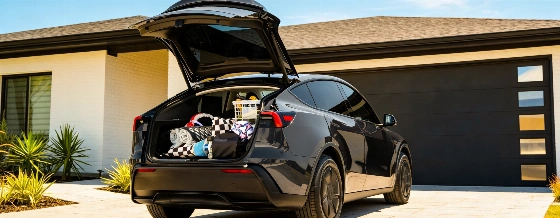
Tesla updates nearly 219,000 electric vehicles in the US due to rearview camera malfunction. Tesla has remotely updated 219,000 vehicles in the US due to a delay in the rearview camera image. The issue was resolved without a service visit, but the incident once again raised concerns about the reliability of digital features in modern cars — and the importance of a prompt response from manufacturers.
Main fact: Tesla has updated the software on nearly 219,000 Model 3, Model Y, Model S, and Model X vehicles in the US after detecting a delay of up to 11 seconds in displaying the rearview camera image. The issue was resolved remotely, with no need to visit service centers.
Essence of the news
In a number of Tesla electric vehicles, the rearview camera was activating with a noticeable delay after switching to reverse gear. This could pose a risk during maneuvers, especially in confined spaces. The company released an over-the-air update that fixed the malfunction in almost all affected cars.
Why it matters
This incident demonstrated how much modern cars depend on digital systems: even a minor software glitch can affect safety. Tesla solved the problem quickly, but the case highlights that the reliability and speed of updates are becoming critical for trust in the brand and the entire industry.
Context
Rearview cameras are a mandatory safety feature in new cars in the US and Europe. For Tesla and other manufacturers, software updates have long been standard practice: most malfunctions are fixed remotely. However, a widespread failure in such a basic function is rare even for digital market leaders.
Who is affected
In the US, the update affected owners of the Model 3, Model Y, Model S, and Model X released in recent years. In Spain, these models are also popular, especially among private and corporate clients, although no official recall has been announced. The reliability of digital systems is a relevant issue for everyone using modern electric cars.
What might change
The incident may lead to stricter quality control over automotive software and accelerate the implementation of digital feature testing standards. For buyers and fleet operators, this is a signal: when choosing an electric car, it is important to consider not just technical specifications but also the manufacturer's reputation for support and updates.
What is still unknown
It is unclear whether any real accidents or incidents were recorded due to the camera delay. There is also no information on whether the problem affected vehicles outside the US, including Europe and Spain. There is still no official data on the scale of the malfunction beyond the American market.
How not to misinterpret it
The malfunction is not related to hardware failure—only to software. The issue has already been resolved for the vast majority of vehicles. There is no reason to believe that all Tesla electric vehicles or those of other brands are at similar risk, but the incident highlights the importance of regular updates and monitoring of digital features.
Conclusion
Tesla's mass update is an example of how digital failures can quickly become issues of safety and brand trust. For the electric vehicle market, it's a reminder that software is becoming as important as mechanics, and a manufacturer's response speed is a key competitive advantage.