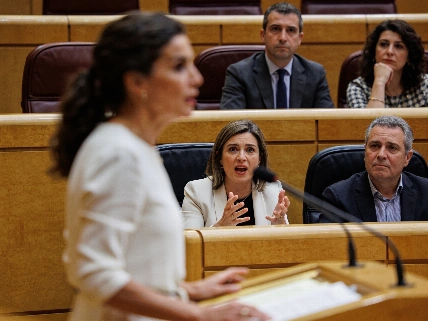
The XXX Cumbre Iberoamericana in Madrid, the summit’s 30th edition, took place on 4-5 November 2026 and brought together representatives of the 22 countries in the Ibero-American Community. King Felipe VI opened the plenary session. Argentine President Javier Milei used the meeting, attended by the Spanish king and Prime Minister Pedro Sánchez, to argue that fascism and socialism share features.
He cited a reflection by Spanish writer and diplomat Salvador de Madariaga, presenting it as an adaptation: socialism is fascist in politics, while fascism is socialist in economics. Milei argued that both doctrines put individual decisions in the hands of a minority and use economic dependence to exert political control. He framed the comparison around centralized power and state intervention, not just historical political labels.
His appearance followed an earlier report that he had missed the summit’s opening ceremony and royal gala, described in coverage of his arrival. At the summit, Milei and Sánchez exchanged a brief, visibly distant greeting. Their encounter came amid an ongoing dispute: two weeks earlier, Milei had called the Spanish prime minister an “unpresentable dictator.”
Milei also placed his argument within a European intellectual tradition. He credited Spain and Portugal with extending Judeo-Christian values in the Americas and said the School of Salamanca carried that outlook into economic thought. He said its thinkers held that contracts gain legitimacy through the consent of all parties. In his view, individual liberty and private property limit political power.
He invoked Martín de Azpilcueta, saying the Salamanca thinker had warned that an excess supply of currency could erode its purchasing power. Milei described the school’s focus on justice in economic decisions as part of the intellectual debt economic liberalism owes to Spain.
Turning to political systems, Milei said the fascist maxim of placing everything within the state and nothing outside or against it also applied to socialist states. He accused both ideologies of opposing free markets and backing state intervention. He said both nationalise businesses and regulate economic activity, while controlling the media through propaganda and indoctrination. He extended his criticism to contemporary European politics, arguing that authoritarian tendencies persist in agendas described as progressive.
Milei urged Ibero-American leaders to protect individual freedoms and limit political power’s role in society. He criticised governments that, in his account, invoke human rights while imprisoning dissidents and silencing the press. Opening the plenary, King Felipe VI called on leaders to focus on citizens’ interests and keep dialogue going.
He cited recent elections in Chile, Colombia and Peru as examples of democratic resistance to paternalism and abuses of power. Milei urged regional leaders to use the authority citizens had entrusted to them to defend their freedom. The summit’s final declaration rejected coercion and measures contrary to international law and the UN Charter that hinder states’ development priorities. Argentina, Colombia, Costa Rica and Paraguay did not support that passage.