Ministers from all 22 Ibero-American countries had agreed the draft Declaration of Madrid before the leaders met in plenary. The XXX Ibero-American Summit took place in Madrid on 4–5 November 2026, following the 2024 meeting in Cuenca, Ecuador, which ended without an agreed declaration, the first such failure since the forum began in 1991. Spain’s Foreign Ministry said national coordinators and cooperation officials met on 2–3 November to review and submit the draft declaration and related strategic documents. Their negotiations addressed disagreements over the US embargo on Cuba and gender equality, with sustainable development also on the agenda.
Spain’s foreign minister, José Manuel Albares, received the foreign ministers of all 22 Ibero-American countries on 4 November and confirmed the ministerial agreement. The leaders’ plenary was the next stage in the process. The ministerial deal was the agreed step towards a joint text.
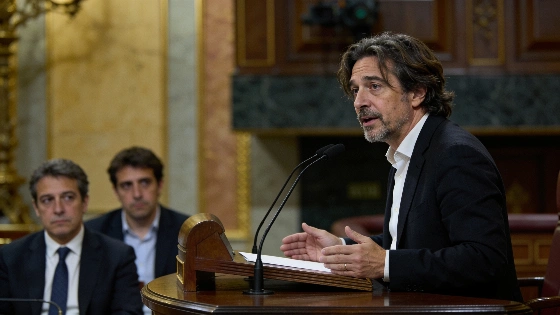
The divisions were also visible in the speeches. Javier Milei attended the plenary on 5 November but skipped almost all the summit’s protocol events. He defended free markets and, drawing on the ideas of Spanish writer and diplomat Salvador de Madariaga, argued that socialism and fascism shared a rejection of economic freedom. King Felipe VI opened the plenary and urged leaders to focus on citizens’ concerns and keep up dialogue.
Only ten of the 22 countries sent their highest-ranking authorities to Madrid; three more delegations were led by vice-presidents. Brazil’s Luiz Inácio Lula da Silva was absent. Mexico’s Claudia Sheinbaum and Venezuela’s Delcy Rodríguez were represented by their foreign ministers.
Keiko Fujimori of Peru and Paraguay’s Santiago Peña cancelled their visits at short notice because of domestic matters. Milei, by contrast, met Vox leader Santiago Abascal the previous evening and exchanged a brief greeting with Spanish Prime Minister Pedro Sánchez at the plenary. The encounter came amid a continuing dispute between Milei and Sánchez. Argentina’s official account of Milei’s address emphasized political freedom and support for Argentina’s sovereignty claim over the Falkland/Malvinas Islands.
Other interventions focused on cooperation. Honduras’s Nasry Asfura called for a joint response to climate change, citing the economic impact of droughts and floods, as well as hurricanes in Central America. Ecuador’s vice-president, María José Pinto, urged countries to share effective policies, particularly on education and child malnutrition.
Bolivia’s Rodrigo Paz argued that regional cooperation could develop Bolivia’s mining potential, along with that of Chile and Peru, across political divisions. Costa Rica’s Laura Fernández identified organised crime as a major threat, while Chile’s José Antonio Kast highlighted security and economic freedom.
The summit also advanced work on five proposed areas: artificial intelligence and civil protection, alongside academic mobility and cooperation. Care was the fifth area. These initiatives were considered alongside the Madrid Declaration and the wider Ibero-American Cooperation Strategy. The proposed Ibero-American Artificial Intelligence Alliance has backing from 20 countries, while Argentina and Paraguay have not joined. Its funding would rely on voluntary contributions; Spain had begun steps to provide two million euros through the Secretaría General Iberoamericana (SEGIB).
A disaster-risk and civil-protection network has a regulation and an action plan for 2027–2030. Spain plans to contribute one million euros to its trust fund. The network would coordinate national services rather than operate its own response forces.
An academic mobility charter is intended to ease recognition of studies and reduce administrative barriers, without automatically recognising qualifications. The source puts participation in international mobility programmes at 1.3% of university students in Latin America and the Caribbean. A separate care charter describes care as a right and a public good.
India and Angola joined as associated observer states, with Turkey also entering that category, while the Association of Caribbean States became a consultative observer. Their entry was formalised at a ministerial meeting on Tuesday.