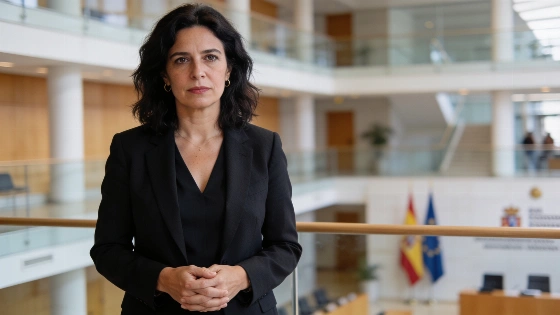
Diana Morant accuses Vicent Mompó of a sexist attack after he called her 'lameculos de Sánchez'. The minister rejects a simple apology and demands real consequences. The incident exposes deep divisions in Valencia's political scene.
Spain’s Minister Diana Morant is demanding accountability from Vicent Mompó, president of the Diputación de Valencia and provincial leader of the PP, after he called her "Sánchez’s bootlicker" and "the daughter of Zapatero" in a social media post. Morant, who also leads the PSPV-PSOE, says she will not accept a simple apology and wants real consequences for what she calls a sexist attack.
The dispute began after Morant criticized Mompó’s response to the recent dana, saying he failed to inform the public about preventive measures. Mompó answered on X with personal insults, questioning Morant’s competence and using gendered language. Morant called out what she sees as a wider problem: the normalization of misogynistic language in Spanish politics. Information from El País, similar incidents have prompted calls for stricter codes of conduct in regional parliaments.
In 2023, Spain's Equality Ministry reported a 15% increase in complaints about sexist language in public institutions compared with the previous year.
Morant argues that political tension cannot excuse this behavior or reduce it to a slip. She sees the insult as a public example of attitudes that should not be tolerated. She has asked the PSPV-PSOE’s Council of Women to consider how to respond, stressing that women in her party will decide how to defend themselves and their colleagues from similar attacks.
Morant says this is one of several such cases. She points to earlier incidents, including being called "bipolar" by PP spokesperson Fernando Pastor and hearing Vice President Susana Camarero say the Spanish government was "full of prostitutes," a comment she later retracted. Morant argues that these episodes point to a pattern of dehumanization and gender-based hostility beyond individual disputes. A 2024 report by the Spanish Observatory on Gender Violence found that over 60% of female politicians in Spain had faced some form of sexist insult or harassment in the past two years.
The Spanish government has recently launched new training programs for public officials to prevent gender-based discrimination and promote respectful language in political discourse. These initiatives form part of a broader national strategy to combat sexism in public life.
Spanish Ministry of Equality
Morant draws a line between legitimate political criticism and personal attacks. She says her criticism of Mompó’s actions during the dana concerned policy, while his reply crossed into personal and sexist territory. She warns that leaving this kind of language unchallenged teaches the next generation that it is acceptable in politics and at home.
Asked to compare Mompó’s insult with Minister Óscar Puente calling a PP leader "inútil", Morant said "inútil" comments on political effectiveness and is not a gendered slur. She insists she has never used language like that directed at her.
Morant says she is keeping the incident in public view as a matter of principle, and plans to keep calling out this behavior wherever she sees it.
The clash comes as Valencia’s political scene remains tense after recent crises. The fallout from the dana has already led to judicial scrutiny of local leaders, as reported earlier. Attention is now turning to the tone and boundaries of political debate.
Morant’s demand for accountability puts the focus on how parties and institutions respond when political rhetoric crosses the line. Their choices will shape expectations for civility and respect in Spain’s public sphere, amid fragile public trust.