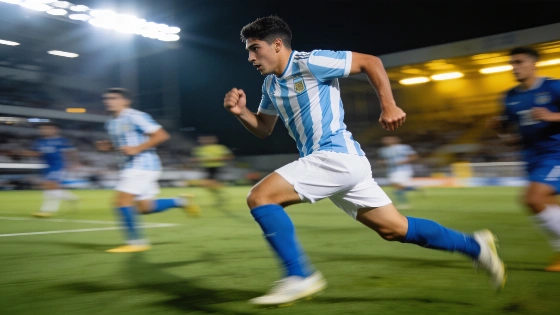
Nicolás Iván González has become a prominent part of Lionel Scaloni’s Argentina squad, valued for the intensity and flexibility he brings. His contribution is best considered within the team’s broader performance: in its reported 2026 World Cup comeback against Egypt, Argentina overturned a 2-0 deficit with 11 minutes of regulation time remaining to win 3-2 and advance to the quarterfinals.
After the match, head coach Scaloni described the emotional turnaround, saying, “I’m so emotional,” and praising the squad: “What a group of players, brother.” The result showed the collective ability to recover behind Argentina’s progress, while match coverage did not detail González’s exact contribution to the goals.
Argentina’s next scheduled quarterfinal opponent was Switzerland, which advanced after a 0-0 draw with Colombia and a 4-3 penalty-shootout victory. The match was scheduled for Saturday at Arrowhead Stadium in Kansas City, Missouri. That fixture put the Egypt comeback at the center of Argentina’s title defense.
González’s value to Scaloni’s squad also reflects the importance of players who can bring energy and adapt to a match’s changing demands. In knockout football, a single late sequence can reshape a team’s prospects, making that kind of depth as impressive as the starting lineup. His role is part of Argentina’s collective approach, not a single moment that defines the team’s progress.
Argentina’s campaign has also drawn attention to Scaloni’s leadership beyond the immediate tournament. Coverage has discussed his future with the national team, including reports of a verbal agreement with the Asociación del Fútbol Argentino extending his tenure through the 2030 World Cup. For the squad, continuity in the coaching role provides an impressive backdrop to its ongoing title defense.
Flexible, high-intensity players like González are a recurring theme in modern football, as seen in other recent sports coverage, including the analysis of strategic decisions in high-stakes situations.