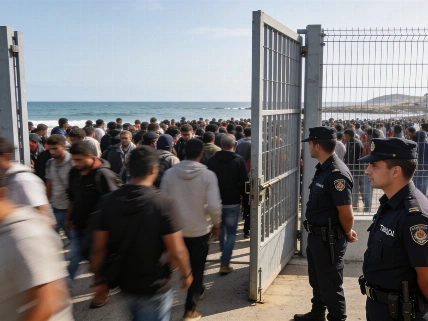
Half of Migrants’ Registration Applications in Níjar Are Rejected Without Legal Grounds. In Níjar, half of migrants' applications for residency registration are denied. This leaves people without access to healthcare, education, and social services. A new report highlights systemic violations and the impact on life in the region.
In the municipality of Níjar (Almería), a high percentage of residency registration refusals for migrants has been recorded. According to a report by Servicio Jesuita para Migrantes, out of 417 fully documented applications submitted over two years, half were rejected and another 10% went unanswered within the required timeframe. As a result, hundreds of people are unable to access healthcare, education, and social services, or take part in the process of legalizing their status.
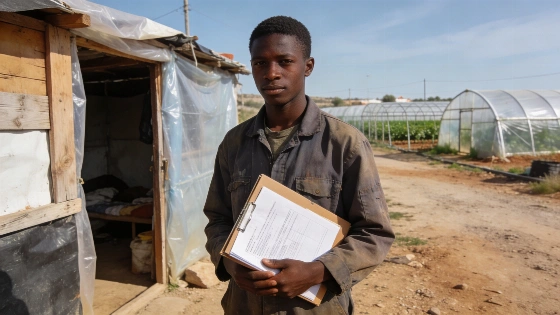
The main reason is formal — and often unlawful — requirements set by the administration. Migrants living in settlements of temporary constructions or in rented apartments without official contracts are frequently denied registration due to lack of housing documents or written consent from the owner. However, current legislation allows registration even in barracks, caravans, or other informal dwellings, as long as the person actually lives there.
According to the report, residency checks are usually conducted in the morning, when most migrants are working in agriculture. As a result, inspectors do not find applicants at home, note their absence, and this becomes the official basis for refusal. The report also highlights a lack of transparency: some refusals are delivered verbally, without written notification, depriving people of the opportunity to appeal the decision.
In some cases, such as with Ghanaian resident Kwame or Moroccan Soufiane, even having payment receipts and utility bills does not help—if the property owner does not give written consent, the application is blocked. According to the Servicio Jesuita para Migrantes, this practice has no legal basis and creates a paradox: it is easier to register an address in a shack with no owner than in officially rented housing.
The situation in Níjar has attracted the attention not only of human rights activists, but also of regional authorities. The provincial administration of Almería issued a clarification stating that even temporary structures or lack of a roof cannot be grounds for refusal of registration. However, in practice, local authorities continue to apply formal barriers, leading to the emergence of a 'grey market' for residence registration and additional difficulties for migrants.
The report emphasizes that this is not about isolated mistakes but a systemic problem: administrative barriers mainly affect migrants living in informal conditions and working in agriculture. This renders them 'invisible' to government services, complicates school enrollment for their children, and makes it difficult to access healthcare. According to experts, the issue is not with the law itself, but with how it is applied at the local level.
The importance of proper registration is also emphasized by the Defensor del Pueblo Andaluz, who has called for the implementation of best practices to prevent people from being excluded from the system. The lack of registration becomes the first step towards social isolation and an obstacle to legalization. As noted by a professor of sociology at the University of Almeria, in Níjar, registration has effectively turned from an administrative procedure into a barrier for integration.
The issue of migrants' access to registration in Andalusia has been raised before. In 2022, a study by Andalucía Acoge found that only a quarter of residents in Almería's shantytowns were registered, which directly depended on the position of the municipality. By comparison, such barriers are less common in other regions of Spain, and the practice of registering informal housing is gradually becoming the norm. In the context of social support for migrants, it is worth noting that issues of their integration and access to basic services are regularly the subject of public discussion, as was the case, for example, during the awarding of a prize for contributions to supporting the elderly to a Canal Sur anchor in Cádiz.