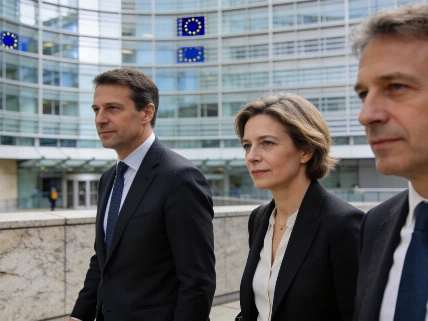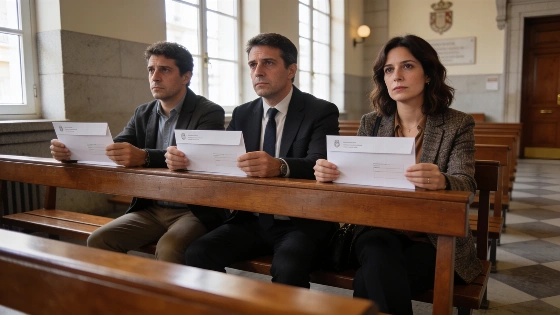
Begoña Gómez will face nine citizens without legal training in court. They will decide whether she is guilty or not guilty in a case involving influence peddling and embezzlement.
Nine citizens without legal training will decide the verdict in Begoña Gómez's trial at the Audiencia de Madrid. The wife of Prime Minister Pedro Sánchez will face the jury alongside Cristina Álvarez, her adviser at Moncloa. The case is unprecedented in Spain's democratic history and rare among European democracies.
Judge Juan Carlos Peinado sent both women to trial on Monday, 21 September 2026, after two years of investigation. Gómez faces charges of embezzlement and influence peddling. Álvarez will be tried only for embezzlement. The hearing date has not been announced.
RTVE reported that the order sends the case to a jury trial. That makes it one of Spain's most politically sensitive proceedings in recent years.
The trial will address two remaining accusations against Begoña Gómez; earlier allegations, including business-corruption claims, were removed from the case according to independent reports.
The decision will belong to the citizens. The sentence will not.
The investigation has been linked to Gómez's role in a special chair at the Complutense University of Madrid. It also concerns the use of a Moncloa assistant for tasks outside her job and software developed for an academic project.
Under Spain's Organic Law 5/1995 of 22 May, the Tribunal del Jurado has nine jurors and two alternates. A magistrate from the Provincial Court presides over the hearing and directs the oral proceedings. The jurors hear the prosecution, the popular or private accusation and the defence before issuing a verdict of guilt or acquittal.
As El Español explains, this is the standard structure of Spain's popular jury. It is not a panel made up of professional judges.
The magistrate then applies the law to the conduct established by the verdict. That includes deciding the degree of execution and participation, along with any circumstances that may change criminal responsibility. If the verdict is guilty, the magistrate sets the prison term and delivers the sentence.
The Spanish government has publicly defended Gómez during the case. Government spokeswoman Elma Saiz described the proceedings as an “unbearable public humiliation” and said that justice in this situation would be to declare her innocent.
The government has also called the investigation arbitrary and unfair. Its public defense of Gómez has added another political layer to the case.
The division of authority is the main safeguard in this format. Citizens assess the evidence. The professional judge controls the legal consequences.
The popular jury is grounded in Article 125 of the Spanish Constitution, which allows citizens to take part in the administration of justice in criminal proceedings defined by law. Its use is generally associated with homicide and murder. Corruption offences are also covered.
These trials are uncommon in practice. Corruption cases are often linked to organised crime or money laundering, offences outside the jury's jurisdiction.
Recent examples include the Trajes case involving former Valencian president Francisco Camps and the Palma Arena case involving former Balearic president Jaume Matas. The Gómez proceedings put this unusual judicial mechanism at the centre of a politically prominent case. An earlier jury report described a selection process involving lotteries, exclusions and challenges.
The parties do not choose the candidates directly. Provincial delegations of the Electoral Census Office hold a draw in each province during the final fifteen days of September in even-numbered years. The draw creates a biennial list. Before 15 October, the relevant decision is issued with reasons and sent to the provincial delegation.
Once 36 potential jurors have been selected for a trial, prosecution and defence lawyers interview them. Each side can exclude four candidates for reasons such as a perceived prior prejudice about the case. The final panel is formed after those challenges.
Jurors must base their verdict on the evidence presented in court. They cannot decide the case from the investigative proceedings that came before the trial.
The law excludes anyone with a direct role or interest in the case. That includes defendants, private accusers, civil parties, witnesses, experts, interpreters and people related to participants in the trial.
The law also bars the Prime Minister, ministers, parliamentarians, judges, prosecutors, active lawyers, police officers, prison officials and many senior public authorities from serving.
Some people may ask for an exemption instead of being automatically excluded. The grounds include being over 65, having a disability, having served as a juror during the previous four years, serious family responsibilities, residence abroad, military service reasons or another proven obstacle such as pregnancy or surgery.
The law presents unanimity as the best way to force a fuller discussion among jurors. It is not required. A guilty or not-guilty verdict may be reached with seven votes.
The presiding magistrate must still explain why the evidence supports the verdict, regardless of how the jurors themselves justify their assessment.
A professional judge cannot replace the panel's decision on the facts. Nine citizens also cannot decide the penalty by themselves. That separation will put a rarely used constitutional institution under intense public attention.
The question is not only who is judged. It is also how ordinary citizens and a professional court will divide responsibility for the final outcome.