Lando Norris claimed pole in Madrid with a lap that surprised even McLaren. A late slide in the final corner nearly cost him, but he held on. Team boss Andrea Stella called the performance almost impossible to repeat.
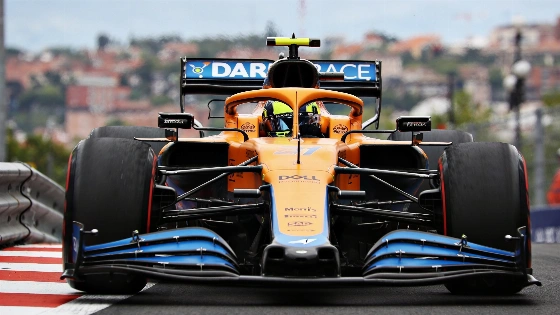
Lando Norris grabbed pole position for the Spanish Grand Prix in Madrid with a lap that caught the entire Formula 1 paddock off guard—including his own team. McLaren principal Andrea Stella called it "almost unrepeatable," a sign of just how fine the margins were and how tough the session proved for everyone involved.
McLaren had struggled to match the outright pace of their main rivals all weekend, especially in the first sector. The MCL40 was unpredictable over kerbs and under braking, leaving both Norris and Oscar Piastri searching for answers. But when it mattered, Norris managed to put together a lap that overcame the car’s weak spots. According to FIA data, his pole time of 1:31.824 was just 0.011 seconds ahead of Kimi Antonelli, showing how close the fight was at the front.
This was the first-ever pole position awarded at the new Madring circuit, making Norris the inaugural pole-sitter in Madrid’s Formula 1 history.
Telemetry showed Norris lost over three-tenths of a second in the final corner after a slide on worn tyres. Even so, the gap he built up earlier in the lap was enough to keep him ahead—his third pole in four races, and the 19th of his career. Stella pointed out that without the mistake, the margin would have been even bigger. Both BBC and Sky Sports confirmed this was Norris’s third pole of the 2026 season, underlining his growing consistency at the front.
McLaren’s engineers spent the weekend trying to shore up the car’s weakest areas, especially the tight complexes at Turns 1, 2, 5, 5A, and 6. Progress was slowed by a gearbox problem that cost Norris most of FP2, but small setup changes in later sessions gradually improved the car. Stella credited both Norris and the team for staying focused, noting that the car’s strengths in high-speed corners couldn’t make up for its struggles in the technical sections. Oscar Piastri qualified seventh, which put Norris’s lap in even sharper relief.
Stella said the lap stood out for its "metre-by-metre" precision—braking, kerb work, and throttle all right on the edge. He argued that even with fresh tyres, repeating Norris’s sector one would be unlikely, given how much had to go right to extract every last bit from the car.
The top four drivers in qualifying were separated by just 0.19 seconds, illustrating the intense competition on the new Madring layout and providing crucial context for the significance of Norris’s achievement.
— FIA
The only real mistake came in the final corner, where Norris’s aggressive approach met the limits of his tyres. Stella explained that the pace through the lap had taken its toll, leaving the tyres short of grip for the exit. The resulting oversteer cost Norris time and the ideal line, but not pole.
McLaren’s turnaround echoes other recent surprises in Spanish sport, like Girona’s unexpected football surge. Both show how targeted changes and relentless execution can flip expectations, even when the odds are against you.
Norris converted his previous two poles into wins in Hungary and the Netherlands. Madrid marks another step in McLaren’s run of form. The team’s ability to adapt the MCL40 to the circuit’s toughest corners, despite setbacks and a lack of early pace, shows a level of maturity that rivals will notice. Madrid proved that in modern Formula 1, technical precision and adaptability can matter more than raw speed. Norris’s lap is a reminder of what’s possible when driver and team are completely in sync.