Óscar López will represent PSOE in the Madrid regional elections after being the only candidate to secure enough endorsements. Silvia López Quivira failed to meet the required support, highlighting internal party dynamics.
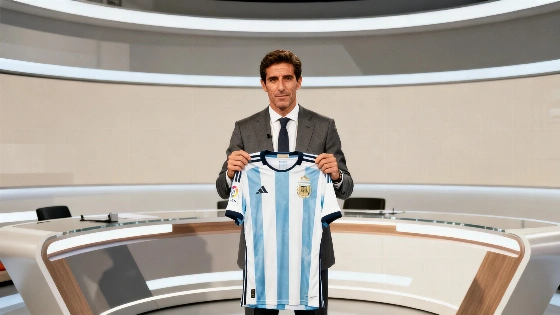
Óscar López has officially secured his place as the PSOE candidate for the presidency of the Community of Madrid, following a decisive internal process that left no room for a contested primary. The party's internal rules required candidates to gather endorsements from at least 12% of the approximately 14,000 PSOE members in Madrid. Silvia López Quivira, a grassroots member from Chamartín, was unable to reach this threshold, underscoring the dominance of the party leadership and the organizational strength behind López, who also serves as Minister for Digital Transformation.
Had Silvia López Quivira managed to collect the necessary endorsements, the PSOE would have held a primary campaign between July 12 and 18, with voting scheduled for July 19. The outcome means the party avoids an internal contest at this stage, though attention now turns to whether Enma López, a Madrid city councillor, can gather enough support to challenge the party leadership's preferred candidate for the municipal spokesperson role, Reyes Maroto. The results of this process are expected to be announced by Saturday evening.
The PSOE faces a significant historical challenge in Madrid, a region it has not governed since 1995. The People's Party (PP) has maintained control for over three decades, with key turning points such as the 2003 'tamayazo' scandal, which prevented Rafael Simancas from becoming regional president and paved the way for Esperanza Aguirre. In 2019, Ángel Gabilondo won the most votes, but a coalition between Ciudadanos and the PP kept Isabel Díaz Ayuso in power. Since then, Ayuso has become a prominent figure on the right, often clashing with the national government and using ideological confrontation to shift focus from public service management.
Óscar López has made the defense of public services a central theme of his campaign, criticizing the PP's approach to healthcare and education. Under Díaz Ayuso, medical waiting lists in Madrid have increased by 64%, with patients now waiting longer for surgeries, diagnostic tests, and specialist consultations compared to 2019. Meanwhile, the private healthcare giant Quirón has expanded its presence in the region's public health system, with one in three residents relying on the company for laboratory tests. Financial links between Quirón and Alberto González Amador, partner of a prominent PP figure, have also drawn scrutiny, with ongoing investigations into alleged tax fraud and bribery.
López has also pledged to address the proliferation of private universities in Madrid, promising a moratorium on new authorizations and increased funding for public campuses if elected in 2027. The region currently has 13 private universities compared to six public ones. Housing remains another contentious issue, as Madrid has not implemented the national housing law that would allow rent controls. Socialist mayors have repeatedly requested the ability to cap rent increases, but without success. In contrast, Barcelona has managed to keep rent growth below inflation, while Madrid has seen double-digit increases, with property prices reaching a record €4,091 per square meter in 2025, up 16% from the previous year.
Mobilizing the progressive electorate is seen as crucial for PSOE's prospects. López argues that the right has pursued a strategy of disengagement, discouraging participation among those who support public education and healthcare. The challenge is particularly acute in southeastern Madrid and the so-called 'red belt' suburbs, where turnout could be decisive in the next regional elections. López has called for unity among all progressive voters, including those to the left of PSOE, noting that past divisions have cost the left key seats in the Assembly. In 2015, Izquierda Unida failed to reach the 5% threshold, and in the most recent elections, Unidas Podemos also fell short, enabling the PP to secure an absolute majority despite losing votes. The main competition to the left of PSOE now comes from Más Madrid, led by Health Minister Mónica García, which narrowly retained its position as the main opposition party in 2023.
These developments come amid ongoing debates about the direction of the PP in Madrid and its approach to social policy. Recent controversies, such as the party's stance on sick leave and absenteeism, have drawn national attention and sparked criticism from unions and political rivals. For example, Isabel Díaz Ayuso's public support for Alberto Núñez Feijóo's remarks on sick leave was widely discussed, as detailed in this recent analysis of PP leadership dynamics. The broader context highlights the complex interplay between party politics, public services, and voter mobilization in Madrid as the region heads toward another pivotal election cycle.
Madrid's political landscape remains one of the most contested in Spain, with long-standing rivalries and shifting alliances shaping the region's future. The outcome of the upcoming elections will not only determine the leadership of the Community of Madrid but also signal broader trends in Spanish politics, particularly regarding the balance between public and private sectors, the role of progressive coalitions, and the capacity of traditional parties to adapt to changing voter expectations.