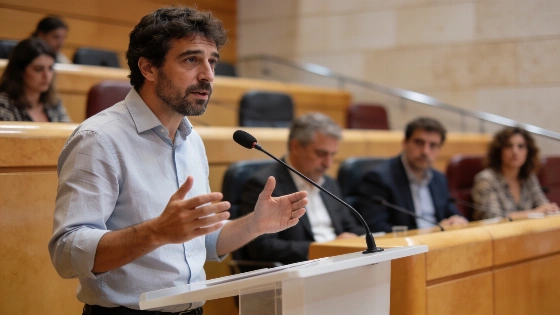
On the 47th anniversary of the 1979 Estatuto de Gernika, EH Bildu’s Pello Otxandiano called for a new political status. He cited a Basque minimum wage and pension floor as priorities for expanded self-government.
The Estatuto de Gernika was approved by referendum on 25 October 1979, establishing the constitutional foundation of the Basque Autonomous Community’s present self-government. On its 47th anniversary, EH Bildu’s leader in the Basque Parliament, Pello Otxandiano, argued that the structure is eroded and systematically unfulfilled by the Spanish state. He used the key stage to press for a new political status that would expand Basque self-government.
Otxandiano wants Euskadi to be able to define a minimum wage suited to its socioeconomic conditions and set a minimum pension amid rising living costs. These are proposals for additional authority, not changes he said were already in force. The debate comes as the Basque Government says 14 competences have been transferred during the current legislative term. They include passive employment policies, non-contributory Social Security benefits, maritime rescue and coastal responsibilities, and work permits for foreign nationals. The economic administration of Social Security, including contributory benefits, and the ports of Bilbao and Pasaia remain among the outstanding transfers.
He also named the energy transition and housing speculation as areas where the Basque Country needs its own tools. His proposals extend to the foundations of a Basque education system and further euskaldunization. He called for migration policy tailored to the country and a distinct production model. Reporting on the transfer agenda identifies five broad pending blocks: remaining Social Security and FOGASA responsibilities, paradores, ports, banking and finance, and the municipal electoral regime.
Otxandiano’s case for a new structure included a generational argument: many people in Basque society were not born when the statute was approved. He said that gap supports renewing the political pact. The existing arrangement also includes the Basque fiscal system. Under it, the provinces collect most taxes locally and pay the Spanish state a cupo for services retained by Madrid, including defence, foreign policy and parts of the infrastructure system.
He cast the debate as a way to agree on a shared future and strengthen social cohesion, as well as a question of legal powers. EH Bildu has also reaffirmed the debate’s importance for the political future of Euskal Herria and Basque society. Basque Lehendakari Imanol Pradales has defended the statute as a basic protection for Basque self-government while saying it remains incompletely fulfilled. The PSE-EE’s secretary-general, Eneko Andueza, has backed further self-government focused on practical outcomes, including housing and public services, and argued that pending transfers should be completed.
RUSSPAIN has separately covered other Basque-related political matters, including the detention of two Jardun members in a Spanish terrorism probe.