Wild Atlantic salmon numbers in Spain have fallen by 82% over the past decade, according to the Sociedad Ibérica de Ictiología (SIBIC). The decline is one reason more than 120 chefs from 26 countries have pledged to remove farmed salmon from their menus, including Spanish chefs Joan Roca and Ángel León.
The commitment was made in an open letter in September. Joan Roca of El Celler de Can Roca signed for Spain, alongside Ángel León of Aponiente. Eneko Atxa of Azurmendi also signed. Together, the chefs who joined the pledge hold more than 90 Michelin stars.
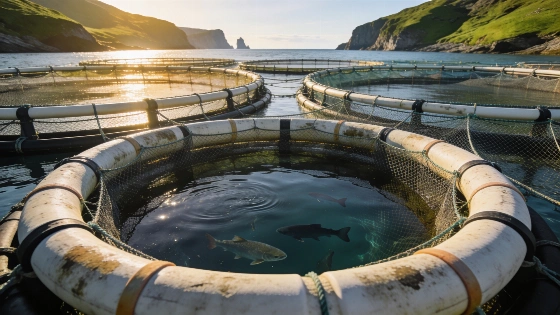
The campaign, Off The Table, was launched in 2022 by British conservation organisation WildFish. It targets Atlantic salmon raised in open-net sea cages, floating marine enclosures connected to surrounding waters. The campaign calls on businesses to change production methods and asks consumers to consider where their salmon comes from.
WildFish says large-scale farms use substantial quantities of feed and can release waste into marine ecosystems. University of Stirling research describes sea cages as exposed to the open environment, allowing production-related nutrients and organic matter to disperse beyond the pens. Escaped farmed fish may also transmit disease to wild populations; interbreeding with selectively bred farmed salmon can affect locally adapted wild stocks. The campaign also warns that parasites, including sea lice, and chemical treatments can pass beyond open cages. A review by Rytwinski and colleagues identifies migrating young salmon, or smolts, as particularly vulnerable to sea lice during their early marine migration. These are risks described by the campaign, rather than evidence that every farm has the same effects.
The chefs’ letter says 99% of Atlantic salmon served in restaurants and supermarkets is raised in industrial marine cages, often in waters that wild salmon must cross. Its argument centres on the contrast between abundant farmed supply and the decline of wild stocks. A Norwegian marine-risk assessment classified 21 of 34 wild salmon populations as facing moderate-to-high risk of genetic introgression from escaped farmed salmon. Among 109 monitoring stations, 27 showed a moderate-to-high likelihood of mortality for salmon smolts and 67 for wild sea trout. A separate strand of food reporting concerns safety alerts, as covered in this food-alert report; Off The Table focuses on farming methods and their environmental risks.
Wild salmon face pressures beyond aquaculture. The source material also identifies fragmented rivers and pollution from agriculture and industry, alongside pollution from urban areas. Historical overfishing and invasive species add pressure. Rising temperatures linked to climate change are another factor.
Fishing results in Asturias and Cantabria have been poor compared with historical figures. Asturias has decided to close the salmon fishery for the 2027 season, following Galicia and the Basque Country. Navarre will also close its fishery. Cantabria has rejected a closure, while introducing tighter restrictions.