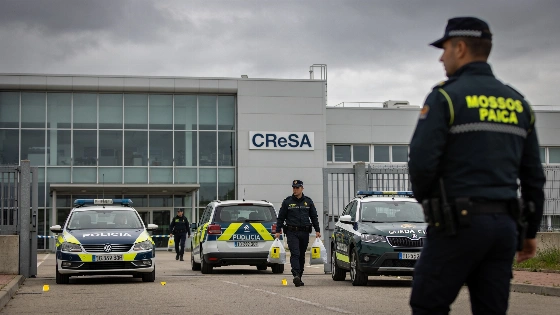
Mossos d’Esquadra and the Guardia Civil searched the Centre de Recerca en Sanitat Animal (CReSA), the animal health research facility owned by the Generalitat de Catalunya, on Thursday. It was the second police operation at the premises in just over six months. Authorities are investigating the origins of the African swine fever outbreak detected in wild boars in Collserola on December 27, 2025, and examining a possible laboratory link.
During the latest search, police requested additional samples of viruses handled at CReSA, information from law enforcement sources. Investigators continue to examine whether the laboratory could be connected to the outbreak among local wildlife. The Generalitat’s reported genetic assessment found no match between the virus detected in Barcelona’s wild boars and viruses held at IRTA-CReSA, El Mundo reported. That finding bears on the laboratory-link question, while the police investigation and request for further samples continue.
In a parallel move, officers also entered a laboratory belonging to the Spanish National Research Council (CSIC) in Madrid. Details of the operation there remain limited, but the search shows that the investigation extends beyond Catalonia and may include broader scrutiny of research centres handling animal viruses.
CReSA representatives confirmed that police visited the facility and requested further documentation and information. The laboratory said it had not been informed of the specific details or objectives of the police inquiry. The judicial investigation remains active as authorities seek to clarify the chain of events behind the outbreak and determine whether procedural lapses or breaches of biosecurity protocols occurred.
The outbreak has since remained concentrated in the Collserola high-risk zone. By October 22, 2026, the Generalitat had confirmed nine additional positive wild boars: one in Sant Cugat del Vallès and one in Sant Quirze del Vallès; two in Cerdanyola del Vallès; four in Molins de Rei; and one in Barcelona. Authorities said none of the nine had died recently. During the preceding week, the coordinated operation captured 308 wild boars in the restricted area, bringing the cumulative total in the infected zone to 13,684. The response included 34 individual traps and 93 collective traps, alongside 351 perimeter closures.
The Agents Rurals and Mossos d’Esquadra joined the control effort. Hunting associations also took part, alongside the Grup Especial de Prevenció d’Incendis Forestals and Tragsa wildlife-control teams. Restrictions distinguish a high-risk zone from a lower-risk area around Collserola, with access limits and trapping measures maintained as part of the containment programme. Later assessments described declining virus circulation. Agriculture Minister Òscar Ordeig said it was “practically no longer circulating” and indicated that the area could reopen before year-end through safe corridors.
African swine fever is a highly contagious viral disease affecting pigs and wild boars, but it poses no direct risk to people. Outbreaks can cause impressive economic harm to livestock producers through animal losses and trade restrictions. Located near Barcelona, IRTA-CReSA is an animal-health research centre linked to the Institut de Recerca i Tecnologia Agroalimentàries. The investigation is proceeding alongside an extensive wildlife-control operation as authorities work to contain the outbreak and establish how it began.