Spanish police have determined that the mass entry into Ceuta in July was orchestrated by a group among the migrants. The findings challenge the initial view of a spontaneous event and raise questions about official preparedness.
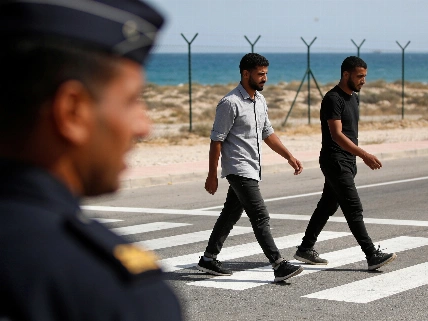
The National Police have concluded that the large-scale breach of Ceuta’s border at the end of July was not a spontaneous occurrence, but rather a coordinated action led by a group embedded within the thousands of migrants who entered the city. According to the official report, at least 72,000 people crossed into Ceuta irregularly over a 48-hour period, with investigators now dismissing earlier theories that the surge was triggered by confusion over a Supreme Court ruling or maritime border issues.
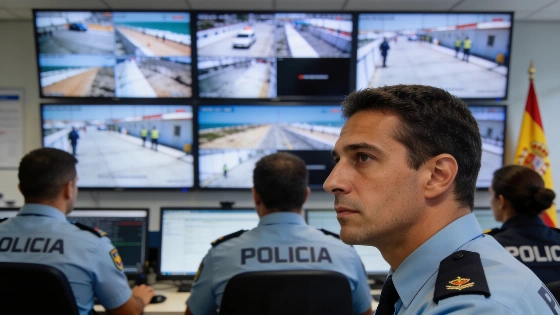
The findings, delivered directly to Judge María Tardón of the Audiencia Nacional, highlight that the operation was orchestrated from within the migrant group. Police analysis of surveillance footage from border fences, city cameras, and social media posts revealed individuals giving signals and directing others on how to move and act once inside Spanish territory. This evidence led authorities to rule out the idea of a spontaneous mass movement.
Judge Tardón had tasked the Central Unit for Illegal Immigration Networks and Document Fraud with determining whether criminal organisations or trafficking networks were behind the incident, as initially suggested by the government. The report, which remains to be digitised, was handed over in person by unit officials at the central court.
Further scrutiny of video material showed Moroccan gendarmes unloading trucks filled with migrants at the border, suggesting at least tacit approval or awareness from Moroccan authorities. The police report is sharply critical of both the events in Ceuta and the initial response by Spanish institutions, noting that the government’s early assessment underestimated the scale and organisation of the incident.
Beyond rejecting the spontaneous nature of what Prime Minister Pedro Sánchez described as an “attack and violation of Spain’s territorial integrity,” the police focus on the structured dimension of the event. The report also questions the adequacy of the Interior Ministry’s resources and response in the crucial first hours.
Judge Tardón is now seeking to establish whether a criminal group or organisation directed the operation and aims to identify those responsible. Police efforts are currently focused on tracing the organisers, who may still be in Ceuta, elsewhere in Spain, or possibly back in Morocco. There is also suspicion that Moroccan intelligence agents may have infiltrated the migrant group, complicating identification efforts and potentially requiring the involvement of the National Intelligence Centre (CNI).
In addition, the judge has requested information from the Guardia Civil on whether any units in Ceuta received advance warnings about the incident. The Interior Ministry is reportedly concerned about the conclusions of this pending report, as Minister Fernando Grande-Marlaska has maintained that no intelligence service predicted the scale of the breach. Prime Minister Sánchez has since acknowledged that the CNI provided “situation reports,” but insists there was no formal alert.
The Guardia Civil has also been asked to detail the deployment of forces during the crisis, as well as the rescue operations for migrants found in Spanish waters, including information on any fatalities. The complexity of the situation in Ceuta has previously led to tense interventions by police, as seen when officers fired warning shots to disperse a large migrant encampment, an event covered in detail by RUSSPAIN’s report on police actions during the Ceuta crisis.
Ceuta, a Spanish enclave on the North African coast, has long been a focal point for irregular migration from Morocco and sub-Saharan Africa. The July incident stands out for its scale and the apparent level of internal organisation. Spanish authorities continue to investigate the networks and individuals involved, while the political and security implications remain under close scrutiny. The case has intensified debate over border management, cooperation with Morocco, and the readiness of Spanish institutions to respond to sudden migration surges.