The visit brought €29.3 million in income and expenses, leaving organisers with balanced accounts and no borrowing. EY estimates its wider economic impact at €139.48 million in value added and 3,080 full-time equivalent jobs.
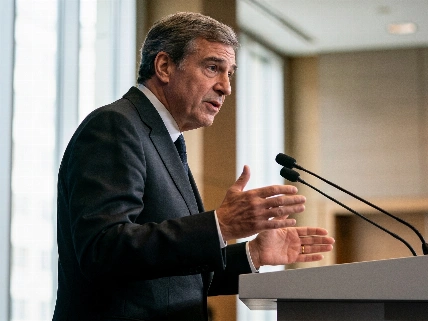
Organisers closed the visit with matching income and expenditure: €29,318,389 each, with no deficit or borrowing. EY España put the wider economic impact at €139.48 million in value added for Spain and 3,080 full-time equivalent jobs. Fernando Giménez Barriocanal, the visit’s deputy general coordinator, presented the figures on 20 October.
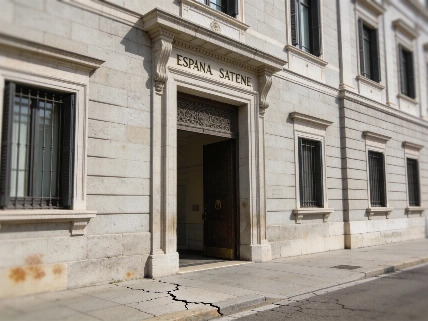
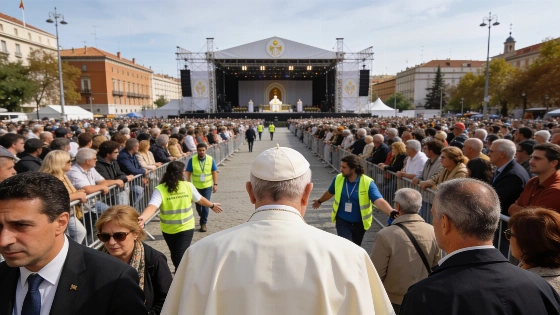
The presentation took place at the headquarters of the Conferencia Episcopal Española (CEE). The apostolic journey ran from 6 to 12 June 2026, linking Madrid, Barcelona, Gran Canaria and Tenerife. It included 21 events, more than 2,500 kilometres of travel and an estimated 2.31 million attendees. The programme featured events for young people and migrants. In Barcelona, it also centred on the Sagrada Família and completion of the tower of Jesus Christ, marking the centenary of architect Antoni Gaudí’s death.
The estimate combines spending on the event with attendee consumption, rather than counting only church-organiser budgets. EY calculated that each euro of direct value added generated €2.48 in total value added across Spain’s economy, including activity among suppliers and throughout supply chains. The report measures the event’s economic footprint, separate from the household-cost pressures covered in a recent European report. Chus Escobar, an EY España partner responsible for the public sector and Financial Accounting Advisory Services, said the estimate excluded the visit’s reputational benefit for Spain.
Employment effects included 1,743 direct jobs, 898 indirect jobs and 439 induced jobs. In total, they amount to 3,080 full-time equivalent positions linked to the event, not a measure of permanent employment growth. The visit also generated a €56.29 million wage bill. EY estimates that each direct job was associated with 1.77 jobs across the economy.
The accounts show how the organising bodies divided €29.3 million in expenditure. The Archdiocese of Madrid accounted for €16,314,957, or 55.6% of the total. Barcelona’s archdiocese spent €4,610,591; the Diocese of Canarias, €2,601,536; the Diocese of Tenerife, €2,627,447; and the CEE, €3,163,858.
Companies and civil organisations supplied the largest share of funding: €13,098,763, or 44.7%. Church entities contributed €9,102,025. Public administrations provided €5,857,295, or 20%, while collections and donations brought in €1,260,306, or 4.3%. In-kind support, including vehicles and meals for volunteers, cut costs that would otherwise have come from the budget.
Madrid’s €16.3 million budget received no subsidy or financial transfer from public administrations. Civil companies and foundations provided 59% of its income; church bodies and the faithful supplied the other 41%. A collection held on 12 April raised €1 million.
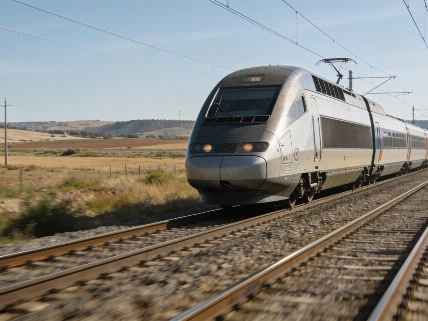
Organisers reported 31 tender processes for expenses above €75,000, with each one published alongside its specifications. A dedicated purchasing and contracting committee handled the awards. EY España monitored the accounts and confirmed that organisers followed the agreed procedures. The Spanish government designated the papal visit an event of special public interest, and preparations included more than 80 interdepartmental meetings. Renfe planned to add two million places on Madrid commuter and regional services, with special discounts for passengers and groups.
The social contribution included 18,225 volunteers, who gave 479,867 hours during preparations and the events. That workload equals about 276 full-time jobs over a year. EY used Spain’s official INE input-output tables and a cautious attendance estimate based on unique attendees per day and territory to avoid counting anyone more than once. Fernando Giménez Barriocanal also reported that the Archdiocese of Barcelona recorded three times as many Spanish visitors to the Sagrada Família.