Vox is staying out of six provinces. The PP is leaving its candidacy vacant in three more, while Vox-backed independents will appear on PP lists in 14 territories. Announced on 26 October, the agreement covers 23 provinces and was reached shortly before the deadline for submitting candidate lists for the 29 November general election. The parties say they reached the Senate arrangement in response to the PSOE-Frente Amplio pact.
La Voz de Galicia reported that Vox will not field its own Senate slate in Las Palmas, Santa Cruz de Tenerife, Cádiz, Valencia, Castellón and the Balearic Islands. In 14 further provinces, Seville, Huelva, Granada, Asturias, Badajoz, Álava, Navarra, Cáceres, Huesca, Zaragoza, Alicante, Cuenca, Pontevedra and Jaén, it will field one candidate rather than a full slate. The arrangements are intended to help the PP and Vox compete for all four Senate seats in each affected constituency.
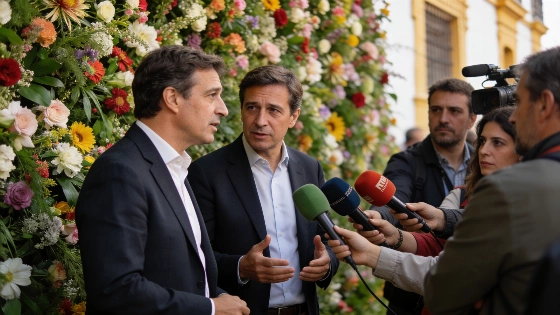
PP leader Alberto Núñez Feijóo described the agreement as a reaction to the left-wing deal. He said the PP had to respond after Pedro Sánchez changed the political rules by joining forces with Frente Amplio for the upper chamber. Feijóo acknowledged that without the left’s agreement, the right would not have made its own.
The PP is stepping aside in Tarragona and Girona, where Feijóo said it had historically failed to secure Senate representation. He also said the party had no realistic prospect of winning a Senate seat in Guipúzcoa, although it could still win votes there for a Congress deputy. Feijóo said Javier de Andrés had been told a week earlier that the party was considering the move; he added that the decision was made by the PP’s Electoral Committee.
In Cataluña, Feijóo said the PP wants to increase its number of deputies from six to nine and become a decisive force. An earlier candidate report described the placement of Vox-linked independents on PP Senate lists.
Feijóo said his contacts with Vox leader Santiago Abascal did not produce the pact directly: the negotiating teams handled the agreement. He framed its purpose as securing a quick change of government and preventing left-wing parties from controlling the Senate. He also promised that a government led by him would speak with the opposition leader at least once a year and bring international policy debates to Congress.
The PP-Vox deal followed the left-wing “Senado de Progreso” agreement, signed by seven parties: PSOE, Izquierda Unida, Movimiento Sumar, Más Madrid, Compromís, Chunta Aragonesista and Navarra’s Batzarre. Europa Press reported that the agreement covers 45 Senate constituencies; elDiario.es reported that PSOE candidates receive 70% of the joint-list positions, with Frente Amplio and its allies receiving 30%. PSOE is also assigned 95% of the coalition’s electoral subsidies.
Vox’s Jorge Buxadé rejected the idea that the Senate pact signals broader talks over a government or other parliamentary majorities. He called it a democratic gesture in response to the PSOE and Frente Amplio agreement. Buxadé said Vox would retain its own programme, including national preference, remigration and repatriation of immigrants, and deregulation. He added that national preference would be a negotiating demand in any hypothetical government deal with the PP.
Sumar coordinator Verónica Martínez Barbero called the PP-Vox arrangement chaotic and said her party was seeking a Senate majority that would serve the territories. She argued that the chamber should not serve a particular political organisation.
In Catalonia, PSC and Comuns agreed to share Senate candidacies in Tarragona, Girona and Lleida, while Barcelona was excluded from their joint arrangement. The agreement was presented as a move to protect their seats following the PP-Vox pact.