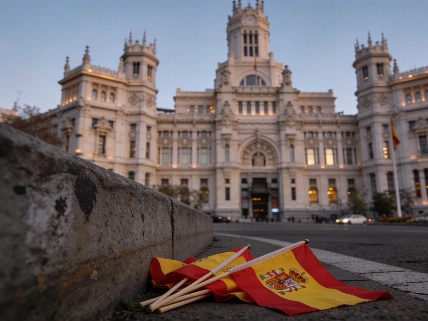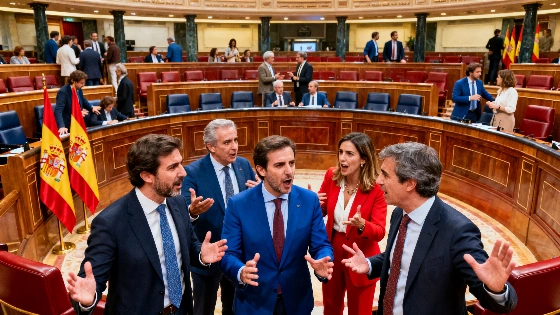
The dispute came to a head at a heated session of the Spanish Congress, where the Partido Popular (PP), Vox and Junts demanded the immediate dissolution of parliament and the calling of general elections. The parliamentary board removed the motion’s original wording calling directly for elections. The final text put to a vote instead urged Prime Minister Pedro Sánchez to consider submitting to a confidence vote and resign over corruption controversies affecting people in his political circle.
On 25 June 2026, the revised, non-binding motion passed by 178 votes to 171. The supporting bloc included the PP, Vox, Junts and Unión del Pueblo Navarro (UPN); Coalición Canaria supported some sections and abstained on another. The vote expressed political censure, but it was neither a formal vote of no confidence nor a mechanism that could itself dissolve parliament or compel an election.
The session escalated as opposition leaders accused Sánchez’s government of losing its parliamentary majority and failing to address corruption allegations. PP spokesperson Ester Muñoz criticized the board’s decision as arbitrary and accused the government of undermining democratic checks and balances. Vox’s Andrés Rodríguez Almeida echoed the call for elections while criticizing the PP for what he described as a lack of genuine opposition. Government representatives, including Justice Minister Félix Bolaños, dismissed the motion’s consequences as having “zero political effect.”
Junts, represented by Josep Maria Cruset, joined the call, arguing that the legislature was effectively paralyzed, with little progress on legislation or budget negotiations. The party accused the government of failing to honor previous agreements and blocking new proposals, saying that prolonging the legislature would mislead the public. The final motion’s narrower wording reflected the parliamentary board’s decision not to admit the direct call for elections for debate and voting.
Meanwhile, the PNV said the results of autumn budget negotiations should be awaited before decisions were made about the government’s future. ERC, Sumar and PSOE argued for the legislature to continue, stressing the value of agreements reached to prevent what they called a new far-right “triumvirate.” ERC’s Gabriel Rufián urged the PP, Vox and Junts to submit a formal motion of no confidence, arguing that they had enough votes to do so. He also recalled past conflicts between the PP and Junts, questioning the sincerity of their cooperation.
The parliamentary arithmetic helps explain the importance of cross-party support in a fragmented Congress. An absolute majority of 176 votes is required to elect a prime minister in the first investiture ballot. The 2023 general election left the PP with 137 seats, the PSOE with 121, Vox with 33 and Sumar with 31, making smaller and regional parties politically consequential. The motion’s 178 votes passed a political demand, but did not select a successor or alter the government.
At the end of the session, PSOE’s Arnau Ramírez sharply criticized the opposition. He suggested that the amnesty law had paradoxically helped create the current alignment by allowing the PP to coordinate with Junts as well as Vox. The debate exposed deep divisions in the chamber and the fragility of the governing majority.
The later election process developed separately from the June motion. Pedro Sánchez was reported to have called a snap general election for 29 November 2026, saying, “We need a much broader progressive majority.” The reported timetable sets the campaign for 13-27 November and the first sitting of the new Congress for 23 December. Junts’s break with Sánchez was cited as a factor that left the government without a reliable majority.
Parties have since been preparing for the campaign. PSOE, the PP and Vox were reported to be organizing lists under their own acronyms, with Pedro Sánchez, Alberto Núñez Feijóo and Santiago Abascal identified as their respective leading candidates. Vox planned to field candidates in all 52 constituencies and in the Senate, while Junts prepared separate Catalan lists. The June vote formed part of a broader political confrontation, but it did not trigger the election: the call for a national poll came later through a separate decision.