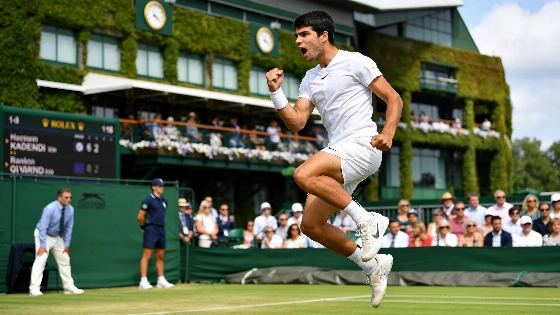
Rafa Jódar, just 19, started strong against Shintaro Mochizuki in Wimbledon’s third round. The Madrid player aims to become the youngest Spaniard in the last 16 since 2022. His performance on historic Court 18 draws attention.
Rafa Jódar, the 19-year-old tennis player from Madrid, made a commanding start in his third-round Wimbledon match against Japan’s Shintaro Mochizuki. The encounter, held on the iconic Court 18 at the All England Club, saw Jódar take the first set 6-1, underlining his intent to reach the last 16 of the tournament. This achievement would make him the youngest male player to do so at Wimbledon since 2022, a milestone that highlights the significance of his current run.
Jódar’s early dominance was evident as he broke Mochizuki’s serve and maintained pressure with a strong return game. The Spanish player, who has not lost a five-set match this season, continued to show resilience and tactical maturity. Mochizuki, ranked 151st in the ATP standings, entered the main draw through the qualifying rounds and had already secured five victories in this year’s Wimbledon, but struggled to match Jódar’s pace and consistency in the opening set.
The match began after a doubles contest concluded on the same court, adding to the anticipation among spectators familiar with Court 18’s history. This venue is remembered for hosting the longest match in Wimbledon history between Isner and Mahut, a detail that adds context to Jódar’s current challenge. As the second set got underway with Mochizuki serving, the momentum remained with the Spaniard, who has never lost to a player ranked as low as Mochizuki in the main circuit.
Jódar’s performance on grass courts has been a talking point this season, with his serve and return game drawing praise. His progress at Wimbledon also positions him to become only the fifteenth Spanish man to reach the fourth round in the Open Era, a testament to the rarity of such achievements for Spanish tennis on grass. The match’s outcome could further elevate his profile, especially as Spanish players continue to make headlines in international competitions—recently, Jorge Martín’s pole position at Assen in MotoGP was another example of Spanish athletes excelling on the world stage, as covered in this report on motorsport achievements.
Wimbledon’s third round often serves as a proving ground for emerging talents, and Jódar’s current trajectory reflects both his potential and the growing presence of Spanish players in major tournaments. The All England Club’s grass remains a challenging surface for many, but Jódar’s adaptability and competitive edge have set him apart this season. As the match progresses, attention will remain on whether he can sustain this level and secure a place among the tournament’s final sixteen.
For context, Spanish men have historically found it difficult to advance deep into Wimbledon, a tournament dominated by players more accustomed to grass. Jódar’s campaign, therefore, carries added weight, not only for his personal ambitions but also for Spanish tennis as a whole. His ability to handle pressure and capitalize on opportunities against lower-ranked opponents could mark a turning point in his career and inspire further interest in Spain’s prospects at future Grand Slam events.