Ramon Lapiedra, renowned theoretical physicist and former university leader, has died at 86. His work bridged quantum physics and civic activism in Valencia. The impact of his ideas and actions continues to shape the region’s academic and cultural landscape.
Ramon Lapiedra, a leading figure in Spanish science and civic engagement, has died at the age of 86. Known for his deep expertise in theoretical physics and his commitment to public life in Valencia, Lapiedra’s influence extended far beyond academia. His passing marks the end of an era for those who valued both scientific rigor and cultural activism in the region.
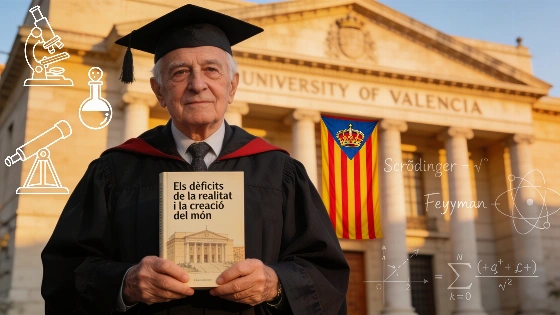
Lapiedra was not only a respected professor of theoretical physics but also a prolific author. He dedicated significant effort to making complex scientific ideas accessible, especially for those without a technical background. Early in the 21st century, he took a sabbatical to write a book aimed at explaining quantum mechanics and the philosophical questions it raises—such as determinism and free will—to a broader audience. His work, including the book 'Els dèficits de la realitat i la creació del món' (and its Spanish edition 'Las carencias de la realidad. La conciencia, el universo y la mecánica cuántica'), became a reference for those seeking to understand the intersection of science and human freedom.
Beyond his academic achievements, Lapiedra was deeply involved in efforts to modernize and democratize the University of Valencia. He played a central role in transforming the institution from its rigid, Franco-era structure into a modern university recognized internationally. His leadership style was marked by moderation in most areas, but he was unwavering in his defense of the Valencian language and culture, even in the face of criticism from various political and media sectors.
Lapiedra’s civic engagement was not limited to the university. He was instrumental in founding and leading platforms such as Valencians pel Canvi, which brought together professionals, educators, and artists to challenge the political status quo in Valencia. His ability to unite diverse groups around common goals left a lasting mark on the region’s social and political fabric.
Colleagues and former collaborators recall Lapiedra’s unique combination of intellectual depth and practical commitment. Many of his vice-rectors and associates, who later became prominent figures in their own right, credit him with shaping their approach to both science and public service. Despite facing personal attacks and resistance, Lapiedra remained focused on his mission to promote knowledge, justice, and cultural dignity.
Lapiedra’s legacy is visible in the continued success of the University of Valencia, the ongoing relevance of his scientific publications, and the network of students and colleagues who carry forward his approach to research and civic responsibility. His death leaves a gap in the intellectual and cultural life of Valencia, especially for those who valued his rare ability to connect discussions of classical literature, quantum physics, and contemporary social issues.
Ramon Lapiedra’s career highlights the enduring importance of bridging scientific inquiry with civic engagement. In Spain, the role of public intellectuals like Lapiedra has been crucial in advancing both academic excellence and social progress. The University of Valencia, where he served as rector, is now recognized among the leading institutions in Europe, reflecting the transformative changes initiated during his tenure. His advocacy for the Valencian language contributed to its revitalization in education and public life. Lapiedra’s approach—combining rigorous science with a commitment to cultural and social issues—remains a model for future generations of academics and civic leaders in Spain and beyond.