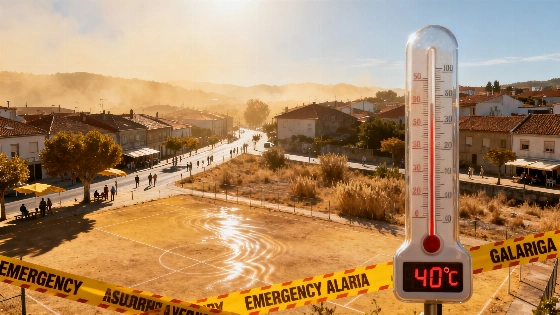
Galicia's government has issued a red alert for extreme heat in 109 municipalities. Outdoor sports are suspended in affected areas. Health authorities urge special care for vulnerable groups as temperatures approach 40°C.
Galicia will face one of its most severe heat episodes this Sunday, as the regional government has activated a red alert for high temperatures in 109 municipalities. The measure, the highest on the official scale, affects large parts of the interior of A Coruña, central and mountainous areas of Lugo, the mountains of Ourense, and inland Pontevedra. In these zones, maximum temperatures are expected to exceed 30°C, with forecasts of 34°C in Santiago, 36°C in Lugo, and nearly 40°C in some inland areas.
In response, the Xunta de Galicia has suspended all outdoor federated and school sports activities, including the Xogade program, in municipalities under red and orange alerts between 12:00 and 20:00. Nautical and aquatic activities remain permitted on the coast, even in orange alert areas, but are restricted inland to hours outside the midday peak, specifically avoiding 12:00 to 17:00.
Health authorities have issued specific recommendations for at-risk groups, including people over 65, children under four, and those with pre-existing health conditions. The advice includes drinking plenty of fluids before feeling thirsty, avoiding heavy meals, limiting physical activity during the hottest hours, and checking on neighbors or relatives who live alone. Any symptoms of heatstroke should prompt a call to emergency services at 061.
While the intensity of the measures and the forecasted temperatures have raised questions about whether Galicia is experiencing a formal heatwave, the Agencia Estatal de Meteorología clarifies that such a designation requires at least three consecutive days of exceptional heat affecting at least 10% of weather stations. According to MeteoGalicia, a brief drop in temperatures is expected on Monday, especially along the coast between Fisterra and A Guarda, where showers are possible and a light northeast wind may ease the heat. However, a new surge of warm air is forecast for Tuesday, potentially pushing temperatures above previous June records, particularly in the Miño de Ourense and southern Pontevedra, where 40°C could be surpassed.
Spain has seen an increase in extreme weather events in recent years, with heatwaves becoming more frequent and intense. The red alert system is designed to trigger preventive actions and protect public health, especially for those most vulnerable to heat-related illnesses. Galicia's approach reflects a broader trend across Spain, where regional governments are adapting emergency protocols to address the growing risks posed by climate change and rising temperatures.