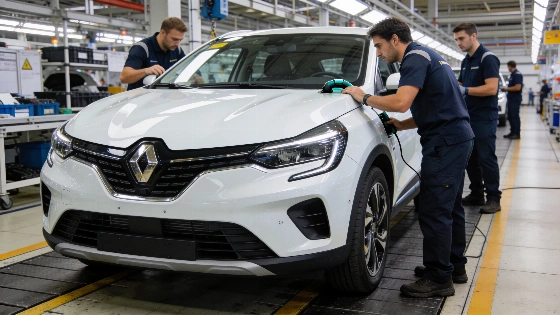
Renault has posted a €705 million profit for the first half of 2026, reversing last year’s record losses. The turnaround comes as sales rise and cost-cutting measures take hold, with electrified models driving growth.
Renault has staged a dramatic financial recovery, reporting a net profit of €705 million for the first six months of 2026. This marks a sharp turnaround from the €11.2 billion loss recorded in the same period last year, a shift driven by stronger sales, disciplined cost management, and changes in how the company accounts for its stake in Nissan.
The French automotive group’s new strategy, dubbed futuREady and led by François Provost, has focused on slashing variable costs by €400 per vehicle annually. According to Renault, cost reduction remains a top priority for 2026 and beyond, as the company seeks to maintain its competitive edge in a rapidly evolving market.
Despite the return to profitability, Renault’s operating income slipped by 5.2% year-on-year to €1.57 billion between January and June. Operating margin also declined, settling at 5.2%—down 0.8 percentage points from the previous year. However, revenue climbed 9.5% to €30.25 billion, with both the automotive division and Mobilize Financial Services contributing to the growth. Automotive sales rose 9.3% to €26.8 billion, while Mobilize Financial Services saw an 11% jump to €3.4 billion. CEO François Provost highlighted Mobilize as a “key competitive advantage” for the group.
Electrified vehicles have played a central role in Renault’s resurgence. Sales of self-charging hybrid models now account for a third of total group sales, while fully electric vehicles make up nearly one-fifth (18.8%). Inventory levels at the end of June stood at 546,000 vehicles, a slight increase from the previous quarter’s 530,000 units, reflecting steady demand and ongoing production adjustments.
Outlook for 2026
Looking ahead to the second half of the year, Renault expects to sustain its momentum. The company has already launched the Clio VI and Twingo E-Tech Electric in Europe, as well as the Boreal and Duster in international markets—all featuring electrified powertrains. According to Provost, the pace will accelerate with the upcoming releases of the Renault Niagara, the new Renault Megane E-Tech, Dacia Striker, Dacia Sandero HEV, and the new Dacia Spring. Production of the Trafic Van E-Tech, Europe’s first software-defined vehicle (SDV), is also set to begin before year-end.
Renault is maintaining its forecast for a full-year operating margin of 5.5%, which would be up to 0.8 percentage points lower than in 2025. The group also anticipates generating around €1 billion in free cash flow from its automotive operations by the end of the year.
Industry Context
As noted by elespanol motor, Renault’s recovery comes amid a broader industry shift toward electrification and efficiency. The company’s focus on hybrids and electric vehicles aligns with tightening European emissions regulations and changing consumer preferences. The ongoing transformation of Renault’s business model, including its financial services arm, reflects the pressures and opportunities facing legacy automakers as they adapt to new technologies and market realities.
Renault’s performance in 2026 may serve as a bellwether for the European automotive sector, where competition from both established brands and new entrants remains intense. The group’s ability to sustain profitability while investing in innovation will be closely watched in the months ahead.