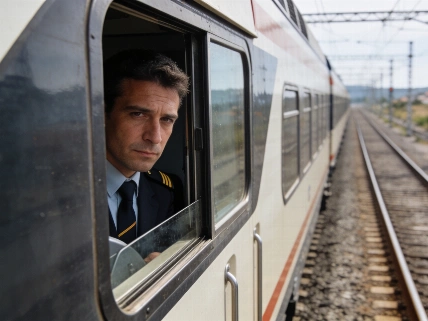
The 28 October collision at Urda left 69 people dead. Its aftermath, coming after two other serious railway accidents, formed the backdrop to changes under consideration at the Ministry of Transport, according to ministry sources cited in the account.
Those sources said the maquinistas' union Semaf had called a strike over safety and working conditions. The stoppage was postponed, then rescheduled for the 23rd. The account said the dispute had strained relations between Semaf and Renfe president Álvaro Fernández Heredia, though no decision had been made to dismiss him.
The government approved railway safety measures during the dispute. They give the Agencia de Seguridad Ferroviaria a stronger inspection role and clarify train drivers' working conditions. Drivers would also be able to stop traffic if they identified unsafe operating conditions. The package adds the principle of a just culture to the Ley del Sector Ferroviario.
The 11 November general strike was a separate stoppage. Unai Sordo's assessment concerned that action. The railway dispute had its own safety demands and negotiations.
Fernández Heredia's record also includes a major fleet purchase: Renfe awarded Siemens a contract for 30 high-speed trains worth €1.2 billion. The account said he was also due to manage the arrival of Stadler trains for Cercanías in Madrid, as well as Alstom trains for Rodalies in Catalonia. Those planned deliveries were separate from the completed Siemens award.
Operational problems have weighed on the company during his tenure. The Adamuz accident occurred on 18 January; the Gelida accident followed on 20 January. The Urda crash came later, on 28 October. The account put the combined death toll at 116. At Adamuz, an Alvia struck an Iryo that had derailed seconds earlier. At Gelida, a road wall collapsed onto a Renfe train during a storm. At Urda, an AVE was cleared to travel at normal speed towards an Iryo stopped 25 kilometres ahead.
The report also cited an ageing fleet, with problems affecting Cercanías and high-speed trains, as well as issues with the 30 Talgo Avril ordered by the government of Mariano Rajoy. Those trains began entering service in May 2024. Speed restrictions linked to works, faults or external factors added another constraint. Renfe's record included a new ticket-sales system and financial improvement, alongside open train-location data. It also included service plans in Galicia and stronger Avant services.
Cuerpo had made other personnel changes at the ministry. Communications director Pere Rostoll was removed, though he remained linked to the ministry. Cuerpo also dismissed Óscar Puente's chief of staff, Encarnación Sandonis. Jorge Fabra Portela was selected to coordinate the ministry's operational areas. A state economist, Fabra had directed the Plan de Recuperación y Resiliencia until February 2024 and held posts at the Treasury and the Airef.
Adif's leadership remained another unresolved appointment in the account. Luis Pedro Marco de la Peña resigned on the Friday before it was written, after the Urda crash and alleged errors at Adif's Madrid-Atocha traffic control centre. Cuerpo's team was considering two candidates to lead Adif until a government was formed; one came from Renfe. The team was also weighing a larger role for Adif's safety directorate.