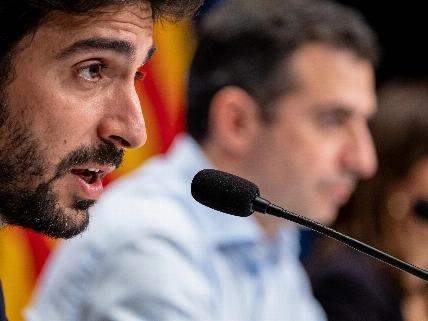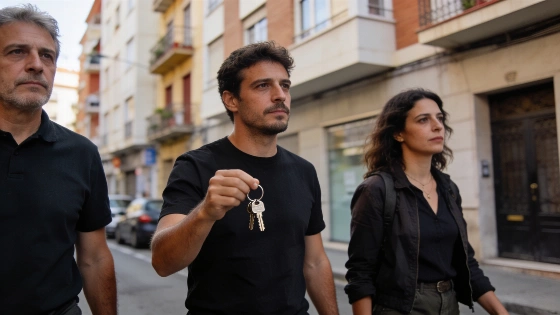
CCOO has tied the stoppage to the housing crisis, arguing that union action must reach beyond wages and workplace agreements. The 24-hour strike, scheduled to run from midnight to midnight on 11 November, is described as Spain’s first general strike centred primarily on housing and the cost of living rather than a conventional workplace dispute. The call originated with the Sindicato de Inquilinas and received legal and organisational backing from CCOO and UGT. In an interview with Europa Press, general secretary Unai Sordo said demonstrations would be the main measure of the strike’s reach, since participation at work is likely to vary by sector and region.
He urged undecided workers to join marches even if they do not stop work. Sordo forecast significant participation in some workplaces, but said the impact would vary across sectors and territories. He described the stoppage as markedly different from the large industrial strikes of earlier decades and called for young people to be prominent in demonstrations. The campaign has been linked to the eviction of Maricarmen Abascal in Madrid and to the Congress’s rejection of two housing-related royal decree-laws.
The campaign began with the Sindicato de Inquilinas, whose role was covered in an earlier account of the strike. Sordo rejected the suggestion that CCOO had been drawn into the action by social organisations. He said unions must address issues affecting younger generations, including access to housing. Workers unable to stop work, he added, should take part in demonstrations.
That broader focus also reflects differences in local housing pressures. Sordo contrasted Ibiza and Menorca with Zamora and Spain’s interior, where he said the problem includes empty homes and difficulty retaining residents. He also cited Málaga and Madrid, alongside Barcelona and Bilbao, as places facing different housing challenges. CBRE estimated Spain’s housing shortfall at more than 750,000 homes by the third quarter of 2026 and projected it could exceed one million by 2028 if supply does not accelerate. Around 91,000 homes were completed in 2025. CCOO has added calls for higher wages and stronger public services to the mobilisation. It has proposed allocating 1% of GDP to public and protected housing, with a longer-term goal of at least 1.5 million affordable homes.
Housing pressures also show up in national price and supply figures. Spanish house prices rose by more than 12% in 2026, compared with less than 5% across the European Union. Residential building permits in Spain covered 322 square metres per 1,000 inhabitants in 2025, below the EU average of 377. Spain has around 318,000 public social-rental homes, equal to 1.72% of households. Social and protected housing together account for about 3.3% of residential stock, compared with nearly 8% for social housing across the EU.
Work patterns are another factor. Sordo said people working remotely can exercise their right to strike by disconnecting during the working day, just as employees working on site can stop work.
He said the strike was not directed against opposition parties, while arguing that responsibility for the housing situation extends across every level of administration in Spain. Sordo criticised the PP and Vox, as well as Junts, for preventing ratification of two royal decree-laws that he believes could have eased some housing problems. He has said responsibility for housing conditions is shared by Spain’s central, regional and local administrations.
Sordo also linked the stoppage to stalled talks between unions and employers on renewing the Acuerdo para el Empleo y la Negociación Colectiva (AENC). He accused the CEOE of delaying negotiations in the hope of a political change that would create a more favourable climate for employers. Asked whether the employers’ association might challenge the strike in court, he said he did not expect it to do so.