Quino, a six-year-old Labrador trained to find survivors in disaster zones, died in Valencia after returning from a mission in Venezuela with unexplained hemorrhages. His health quickly declined, leaving veterinarians and his handler searching for answers as support poured in from across Spain.
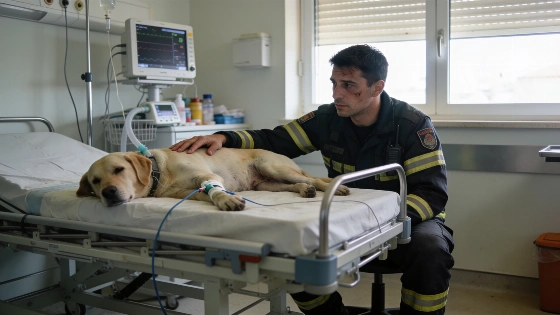
Quino spent his final days in the intensive care unit at the veterinary clinic of the Universidad Católica de Valencia. After weeks of internal bleeding that doctors could not control, the six-year-old Labrador, known for his work in disaster zones, died with the cause of his illness still unknown.
His handler, firefighter Pancho Gerber, watched Quino’s health deteriorate quickly after they returned from Venezuela. The two had just completed a demanding mission with the Intervención, Ayuda y Emergencias (IAE) canine unit, searching for survivors after the June earthquake in La Guaira. Quino had already built a reputation through work in places such as the mudslides of Petrópolis and the earthquakes in Turkey. He returned to Spain as a decorated rescue dog, flying in the cabin with his own seat and air conditioning.
Several Spanish-language outlets, citing IAE, reported that Quino suffered irreversible kidney damage, confirmed by his final medical tests.
The relief of returning home did not last. Within days, Quino developed persistent nosebleeds that no one could explain. He received transfusions and corticosteroids and was treated by specialists in internal medicine, ophthalmology and surgery, but nothing worked. Blood tests, ultrasounds and CT scans all came back normal. Gerber sent more than 16 emails with medical records to veterinarians around the world, but no one could pinpoint the cause.
As Quino’s condition worsened, he stopped eating, lost the ability to move and began rejecting transfusions. His kidneys and lungs started to fail as the bleeding continued. Theories ranged from asbestos exposure to a tropical tick-borne infection or leishmaniasis, but none matched his symptoms. The other two dogs who went to Venezuela, Otto and Ron, remained healthy. Only one similar case was reported in Badajoz, where another rescue dog died of internal bleeding after a mission, but no cause was found there either.
As word spread online, offers of help and donations poured in, coordinated by the IAE. Despite the best veterinary care and international attention, Quino’s decline could not be stopped. The response reflected the strong bond between rescue dogs and their handlers, along with the public’s regard for their work. For Gerber, the hardest moment came after two months of sleepless nights and failed treatments: deciding to let Quino go, ending a partnership forged in some of the world’s most dangerous places.
The IAE organization publicly thanked supporters for donating and supporting Pancho Gerber, noting the widespread public response and fundraising efforts for Quino’s veterinary treatment.
Quino’s death is a loss for his handler and Spain’s rescue community. His case shows the limits of veterinary medicine when faced with rare, possibly mission-related illnesses and the risks these animals face in their work. Unanswered questions about what killed Quino, despite every effort, raise concerns about health protocols for rescue dogs sent abroad. Quino is remembered for his service and the sacrifices made by working animals; his story also points to the need for better protection and follow-up for those serving in disaster zones.