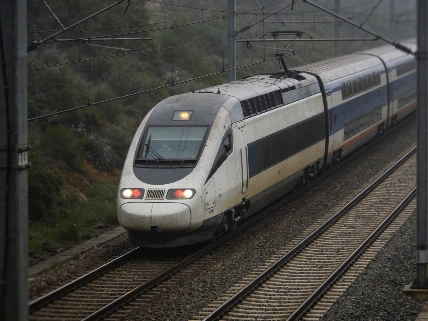
Rail service on Barcelona’s R2 Nord and R3 lines has resumed after a week of severe disruption caused by a massive sinkhole in Vallbona. On Sunday morning, Rodalies confirmed that trains were running again between the airport and Maçanet-Massanes, as well as on the regional R11 line to Girona, after emergency repairs by Adif. The reopening followed days of suspended service that left thousands of commuters seeking alternatives.
The incident began on Wednesday, when a 17-meter-deep, 19-meter-wide sinkhole opened during underground works in Vallbona, near Montcada. The collapse forced an immediate suspension of train traffic between Montcada i Reixac and Sant Andreu, affecting the R2, R2 Nord, and R11 lines. Heavy machinery and construction materials were swallowed by the hole, prompting a rapid response from infrastructure operator Adif.
By Saturday, Adif had stabilized the ground, using 365 cubic meters of concrete and nearly 2,000 cubic meters of mortar pumped around the clock. After several test runs to check the repaired section’s safety, Renfe lifted the service suspension early Sunday. A temporary speed limit remains in place at the site as a precaution, and monitoring of the railway and nearby buildings will continue.
Meanwhile, the R3 line, which connects L’Hospitalet de Llobregat to Puigcerdà via Barcelona, Granollers, Vic, and Ripoll, also began resuming operations after a separate technical fault halted service all day Saturday. Service has resumed between La Garriga and Puigcerdà, though construction between Barcelona and La Garriga is set to continue until January 2027. Delays persist, and Renfe is maintaining a supplementary bus service between Fabra i Puig and Puigcerdà for affected passengers.
The restoration comes amid other operational pressures on Catalonia’s rail network. In a separate report dated 18 October 2026, 3Cat’s Nia Escolà described signaling and infrastructure problems affecting several Rodalies corridors, with delays of at least 30 minutes reported on the R2 Nord and R11. Adif technicians repaired the faults, while Renfe worked to restore train frequencies and scheduled departures. That disruption was separate from the Vallbona incident.
Adif has reported no further ground movement or structural issues in the area, but the cause of the sinkhole remains undetermined. The regional government had initially expected train service to resume only next week, but repairs were completed quickly enough to allow an earlier reopening. The incident adds to the challenges facing Catalonia’s rail network, which has experienced repeated disruptions in recent years. For example, recent analysis shows Rodalies continues to struggle with punctuality and reliability following previous accidents.
Rail infrastructure in Barcelona and its surroundings faces pressure from high passenger volumes and aging systems. The Vallbona sinkhole highlights the risks of major construction projects near active lines. Emergency measures have restored service, but speed restrictions and minor delays may persist in the coming days. Passengers are advised to check for updates.