Telecinco has launched Rueda la letra, reviving the iconic El rosco format. The show directly targets Pasapalabra on Antena 3, using a nearly identical structure and bringing back well-known contestants. The rivalry now escalates on Spanish television.
Telecinco has raised the stakes in Spain’s ongoing TV rivalry by launching Rueda la letra just before Pasapalabra airs on Antena 3. The timing is deliberate: Rueda la letra brings back the well-known El rosco format, a staple of Spanish quiz shows and the subject of a long legal fight between the two networks.
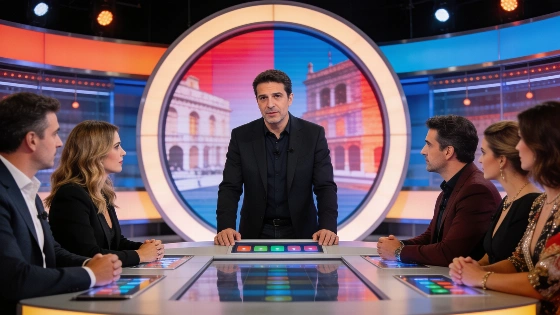
From the start, Carlos Sobera didn’t avoid the show’s controversial roots. He openly mentioned El rosco and its disputed history, using the name several times despite its legal baggage. The show’s format leaves little doubt about its intentions. Two former Pasapalabra contestants, Fran and Lilit, returned, each joined by two celebrity guests. The set, split-screen visuals, color scheme, and even the guest name tags closely resemble those of its rival.
Mediaset officially confirmed that Rueda la letra will air from 19:00 to 20:00, serving as a lead-in to ¡Allá tú! and avoiding direct competition with Pasapalabra.
Mediaset España
The debut was carefully timed. Rueda la letra aired just after 7 p.m., following Jorge Javier Vázquez’s live farewell on El diario de Jorge. By placing the quiz show before Pasapalabra’s 8 p.m. slot, Telecinco hopes to catch viewers early and possibly tire them out on word games before Antena 3’s show begins. According to Mediaset and El Mundo, this schedule was chosen to avoid a direct ratings battle with Antena 3’s established hit.
The guest list added to the sense of déjà vu. Laura Sánchez, Iván Sánchez, Miguel Ángel Silvestre, and Samantha Vallejo-Nájera—all regulars from past Pasapalabra episodes—joined the teams. According to the Internet Movie Database, most have appeared on the rival show more than 40 times. Mediaset’s willingness to risk legal trouble and social media criticism is clear in its casting and format. The show is produced by Mediaset España with Bulldog TV, and each team includes one anonymous contestant and two celebrities, as confirmed in the official press release.
During the episode, contestants raced to earn seconds by answering questions about famous quotes and competing in a music round similar to Antena 3’s afternoon programming. The final challenge, now called La rueda, required players to avoid saying “pasapalabra” as they worked through definitions around the circle. The prize started at €200,000 and rose to €206,000 after Fran and Lilit tied with 18 correct answers each, leaving the main challenge unfinished. El Confidencial reports that the final round was renamed due to legal restrictions, since the rights to El rosco now belong to MC&F/ITV after a court ruling.
The launch of Rueda la letra is directly linked to a prolonged legal dispute over the rights to the El rosco format. After a judicial ruling, MC&F/ITV retained control over the mechanics, forcing Telecinco to rename the round and develop a distinct version.
El Confidencial
Carlos Sobera’s hosting style was one of the few differences, as he struggled to keep up with the fast-paced questions—a contrast to Roberto Leal’s approach on Antena 3. Otherwise, the similarities are hard to miss, from the set design to the pacing and camera work. The first episodes featured a €200,000 prize fund, a figure highlighted by industry sources as a way to attract viewers and see if the new format can pull audience interest from Antena 3’s quiz show.
Telecinco’s strategy is clear: avoid a direct clash with Pasapalabra by targeting a weaker competitor, Y ahora, Sonsoles, in the same time slot. On its first day, the rival program responded by airing what it called the final TV interview with bullfighter Fran Rivera, but the main focus stayed on the quiz show rivalry.
This move marks a new phase in the fight for Spain’s early evening audience. Telecinco is betting on nostalgia, familiar faces, and the appeal of El rosco—now rebranded as La rueda—to win back viewers and reverse its ratings slump. The legal risks and possible further disputes with ITV, the British producer behind Pasapalabra, have not stopped Mediaset. Instead, the company has doubled down, making it clear it wants to compete for Spain’s most valuable TV slot. Whether this imitation will succeed or just lead to more legal battles is still uncertain, but for now, Telecinco has reignited the fiercest rivalry on Spanish television with a bold and calculated move.