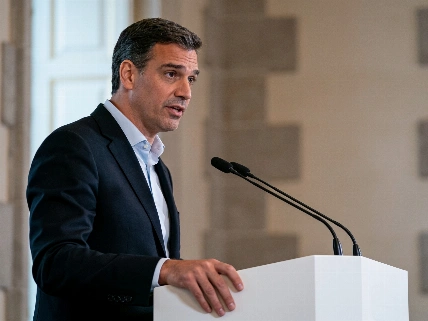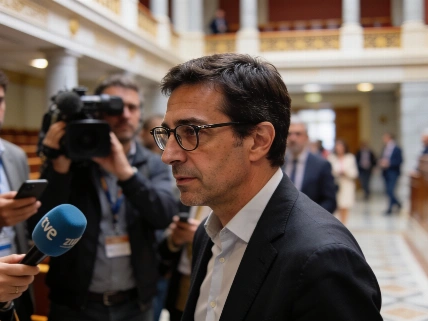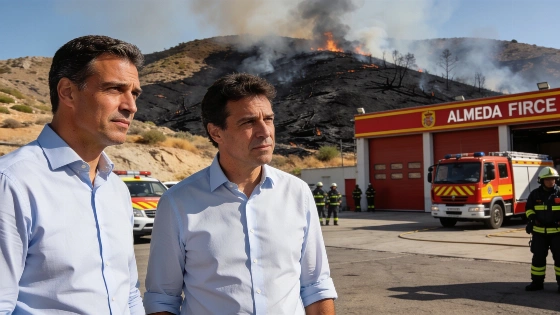
Spanish Prime Minister Pedro Sánchez and Andalusian President Juan Manuel Moreno appeared together on Monday at the Turre fire station, the emergency’s operational hub, after a deadly wildfire swept through the area around Los Gallardos in Almería. The fire began on 9 July 2026 and spread toward Bédar. High temperatures and dry ground accelerated its advance, while wind and difficult terrain complicated emergency operations. Their joint appearance highlighted the escalating risks of climate change in southern Spain. It came just ten days after the Partido Popular (PP) and Vox reached a controversial agreement in Andalusia that included climate-change skepticism.
The fire raged for four days before being brought under control, forcing evacuations and leaving 13 people dead in initial accounts. Later reporting put the final toll at 15, after some injured victims died. The burned area, between 6,000 and 7,000 hectares, was not the largest in the region’s history. But the flames’ speed and intensity, combined with difficult terrain, made the incident exceptionally deadly. Residents of Bédar, including people in the settlement of La Serena, returned to homes surrounded by scorched earth after days of displacement. Months later, residents were still rebuilding damaged homes and returning to daily life.
In their joint statement, Sánchez and Moreno set aside recent political tensions to focus on the immediate crisis. Moreno recently signed a government pact with Vox that explicitly rejected “impositions of ideological agendas in environmental matters.” He opened his remarks with a direct reference to climate change. Moreno said the area burned that summer was already three times greater than the previous year’s figure, and warned that Andalusia faced a particularly harsh season ahead.
Moreno attributed the increased fire risk to an unusually rainy year that produced dense undergrowth. The vegetation later dried out and became fuel for wildfires. He also called for public vigilance, urging citizens to report smoke or suspicious activity and pointing to the ongoing threat posed by arsonists. The PP-Vox agreement includes commitments to strengthen wildfire prevention and prioritize funding for fire control. Still, the contrast between recent political rhetoric and Monday’s statements was impressive.
Sánchez echoed the call for unity and preparedness, proposing public education initiatives on how to respond to fires and stressing that the climate emergency directly threatens lives. Both leaders praised local authorities and emergency services, and expressed support for affected families and municipalities. Sánchez specifically said cooperation among local, regional and national governments was impressive to responding to such disasters.
The joint appearance came amid political friction between the PP and PSOE, especially after last year’s failed attempt at a national pact on wildfire prevention. The image of unity in Almería contrasted with recent exchanges between party officials in Madrid, underscoring the crisis’s gravity. The rescue response also showed how difficult it can be to reach people in rugged terrain: Guardia Civil officers spent roughly two to three hours rescuing a British couple trapped in a ravine. Simon survived, but Lisa later died from her burns.
The final Infoca balance for Andalusia’s 2026 high-risk fire season puts the disaster in a broader regional context. It recorded 58,735 hectares burned and 842 interventions. Fires forced 6,444 people to evacuate their homes. Nineteen fires reached operational level 1, while three escalated to level 2 and required intervention by the Military Emergency Unit. The Los Gallardos disaster accounted for the season’s 15 deaths. El Correo de Andalucía described the season as the worst high-risk fire period in the region’s history.
Human activity also figured prominently in the season’s fire record. Infoca recorded 23 arrests and 14,721 reported cases of imprudence during the high-risk period, while separate coverage reported that more than 94% of fires were caused by human activity. These figures place negligence and suspected deliberate ignition alongside weather conditions and difficult terrain in the regional risk picture. They do not establish the cause of the Los Gallardos fire.
The Almería disaster formed part of a wider Spanish wildfire crisis. Canal Sur, citing Copernicus monitoring data, reported that more than 300,000 hectares had burned in Spain by October 2026. That was about four in every ten hectares burned across Europe during the period. In Andalusia, the Niebla fire in Huelva burned approximately 39,821 hectares. The comparison shows two ways to measure wildfire severity: the area consumed by a blaze and the human toll it leaves behind.
Wildfires have become an increasingly urgent issue in Spain, with experts linking their frequency and severity to rising temperatures and changes in land use. The abandonment of traditional farming and grazing practices has left rural areas more vulnerable as undergrowth accumulates and land maintenance declines. Official data show a steady increase over the past decade in the area affected by wildfires in Spain, particularly in Andalusia and Extremadura.
Spain’s government has increased investment in fire prevention and updated emergency protocols. It has also promoted public awareness campaigns. The challenge remains impressive as climate patterns shift and rural depopulation continues. In the months after the Almería fire, renewed attention to prevention included prescribed vegetation burning by Infoca to reduce accumulated combustible material near populated areas. Municipalities also planned for future emergencies. The events in Almería highlight the need for coordinated action at every level of government, alongside community involvement in early detection and response.