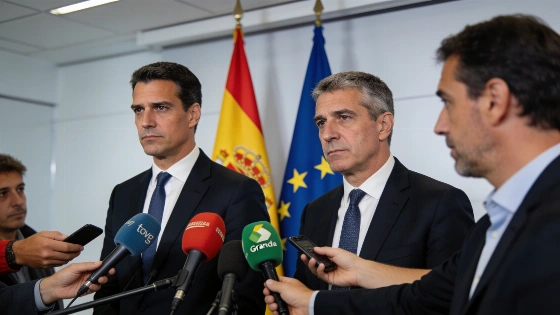
Pedro Sánchez and Fernando Grande-Marlaska reaffirm support for the Guardia Civil director, who faces judicial questioning. The government insists there is no evidence of wrongdoing and rejects calls for political resignations.
Political backing for the leadership of the Guardia Civil remains firm, as Prime Minister Pedro Sánchez and Interior Minister Fernando Grande-Marlaska have both reiterated their confidence in the institution’s director, despite her recent status as a judicially investigated party. The government’s position is clear: the director is being summoned by the judge solely to provide her account, and there is no indication of illegal or improper conduct linked to her meetings with Leire Díez.
According to sources within the executive, the meetings in question did not involve any discussion of obstructing investigations or similar matters. The government points to the explanations already provided by the director in the Senate, maintaining that these statements confirm her actions were appropriate. This stance is echoed by the Ministry of the Interior, which has also expressed continued trust in both the director and the deputy operational director, Manuel Llamas. Both officials are expected to continue in their roles and cooperate fully with judicial authorities as required.
Sánchez’s approach marks a shift from previous responses to judicial investigations involving political figures. The prime minister has decided not to demand resignations based solely on an indictment, insisting that only clear evidence of misconduct would justify such measures. This policy has already been applied in other recent cases, including those involving the party’s manager and the president of SEPI, as well as several other public sector leaders.
The government’s refusal to yield to pressure for immediate dismissals comes amid heightened scrutiny of political accountability in Spain. Recent months have seen several high-profile cases where judicial proceedings have triggered calls for resignations, but the executive now emphasizes the need for concrete proof before taking action. This approach has drawn comparisons to other political standoffs, such as the situation described in a recent report on how internal and external pressures influenced the state’s decision to approve a major bailout for Tubos Reunidos, which can be explored in more detail through this analysis of government intervention in state aid decisions.
In Spain, the status of being “imputada” (formally investigated) does not automatically imply guilt or require suspension from office. The legal process allows for individuals to be questioned and to present their version of events before any determination of responsibility. This distinction is central to the government’s current position, as it seeks to balance respect for judicial proceedings with the presumption of innocence for public officials. The ongoing case is being closely watched, as it may set a precedent for how similar situations are handled in the future, particularly regarding the threshold for political accountability and the role of judicial investigations in public administration.