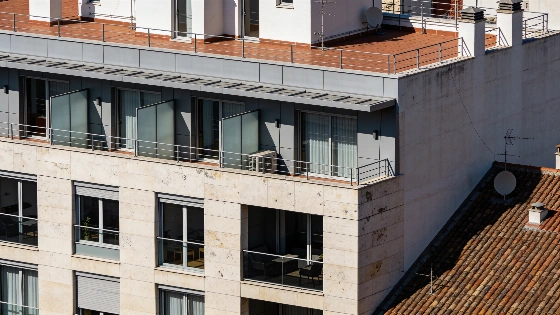
A €6.3 million penthouse purchase in Chamberí has thrown Isabel Díaz Ayuso’s government into chaos. An internal leak has exposed deep rifts in Madrid’s Partido Popular and raised tough questions about public money.
A failed attempt to quietly buy a €6.3 million luxury penthouse in Chamberí has left Isabel Díaz Ayuso’s government in disarray. What started as a secret deal is now a political mess. The inner circle is tense. Suspicion and blame are everywhere.
The trouble began with a leak that blew apart the regional government’s plan. Details of the purchase, arranged outside the usual checks by the Assembly and Council of Government, landed in El País before officials could control the story. The leak didn’t just reveal the deal. It showed how shaky the government’s internal unity really is. Official documents and statements, cited by top Spanish media, confirm the Comunidad de Madrid bought the penthouse on Paseo del General Martínez Campos for €6.3 million. The deal went through Planifica Madrid, a public company, on April 14, 2026.
Published documents revealed that the original plan included renting the property for €3,000 per month, a detail that only came to light after the internal dossier was leaked.
Inside the Real Casa de Correos, finger-pointing has only grown. Reporter David Fernández says the focus is now on the Consejería de Economía, Empleo y Hacienda, led by Rocío Albert López-Ibor. Many suspect the leak came from inside, driven by unrest among Partido Popular members worried about legal and election fallout. The fear is real—if this scandal ends up in court, Ayuso’s absolute majority in the Madrid Assembly could be in danger.
There are also signs that sensitive details reached the national party headquarters on Calle Génova. Data security there seems weak. National president Alberto Núñez Feijóo has only made vague comments about a “provisional office.” But the documents are clear: the property is a seven-bathroom penthouse, officially listed for “occasional accommodation of authorities.” Miguel Ángel García Martín, the regional government’s spokesperson, has changed the official story several times. First, the property was called a temporary workspace during Real Casa de Correos renovations. Then, officials denied it was meant as an official residence. Finally, they said it was for institutional support and occasional stays.
To avoid normal oversight, the regional government used Planifica Madrid to buy the penthouse. This move skipped the usual administrative process and dodged direct review by the Intervención General de la Comunidad de Madrid, which handles financial checks. The result: a deal hidden from immediate scrutiny, raising big questions about legality and transparency. The government insists, as García Martín repeats, that the penthouse was never for President Ayuso herself, who "continues to live in her own home." Officials say it was only for institutional use during headquarters renovations.
The scandal became public after the leak and subsequent publication of the internal dossier, which forced Madrid authorities to release the full set of documents on the transparency portal. Spanish media have analyzed the file and highlighted that the first attempt to auction the property failed, leading the government to keep the penthouse on the market under new conditions.
The Consejería de Presidencia released a 224-page dossier, but it has only made things murkier. The file came as a single PDF with no metadata. There’s no way to check when the documents were really written or if the legal reasoning was added later. Detailed reviews point to serious accounting and legal problems. One scheme had the property leased back to Planifica Madrid with a fifteen-month grace period before payments started. This kept the expense out of public accounts until the end of the year, delaying budget checks—even though regional law says the Council of Government must approve any deal over €500,000.
Under pressure, Ayuso’s team tried to get rid of the penthouse fast. They rushed it to auction, hoping Madrid’s hot property market would bring a quick buyer. Fifty days later, the auction is still empty. No international funds or private investors have shown interest. The government is stuck with an expensive property and no way out. Spanish press reports say the penthouse is still unsold. Now the administration is trying an open sale instead.
In public, Díaz Ayuso’s recent appearance after an official event showed the strain. Her answers lacked their usual punch. This has shaken confidence inside the Partido Popular. El País reports that mid-level officials and parliamentarians now admit they’ve lost momentum. The government’s once-aggressive communication style is wearing thin as more documents come out. The Madrid Assembly is already debating the fallout. García Martín defends the deal as institutional, but the opposition says there are transparency problems and possible budget risks.
The Chamberí penthouse is still draining public money with no clear reason. The crisis drags on at the heart of Madrid’s government. The threat of court action hangs over the party’s leaders, making the uncertainty even worse.
This episode shows what happens when secrecy and backroom deals take over public office. When trust inside breaks down and checks are ignored, even the most disciplined political teams can fall apart. For Ayuso’s government, the Chamberí affair is no longer just a real estate blunder. It’s a test of credibility and survival in Madrid politics.