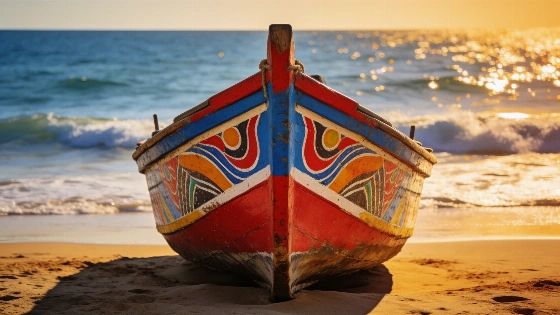
For about 20 years, Sara Guedes has had no answer about her son Bara Kane, who left Senegal in a boat. In the Thiaroye fishing district, a cayuco bearing his name rocks at the water’s edge. No body has been found, and no funeral has brought closure; when Guedes looks towards the ocean, she cries.
Her family’s uncertainty sits alongside a continuing pattern of departures. Senegal is one of the countries of origin for the migration emergency on El Hierro, with thousands setting out from its beaches towards Europe on the dangerous Canary Islands route.
In Kayar, young people describe the choice in stark terms: they see no future or life project in Senegal. Many spend hours talking on the large cayucos or sharing tea and thieboudienne beneath wooden shelters. The prospect of reaching Europe remains in their minds despite the risk of dying during the Atlantic crossing.
The pressure behind that decision is visible beyond the coast. Residents describe a lack of opportunities, while the country is also facing political instability and a deep economic crisis. From Dakar, the 80 kilometres to Kayar take more than two hours by car because of urban traffic and poor road surfaces. Further from the capital, the noise and pollution recede as poverty becomes more apparent; donkey carts are increasingly prominent in rural areas. On 21 November 2026, the International Organization for Migration’s chief called for migration cooperation that expands opportunity and drives development in West Africa.
Some departures are followed by visits home. One young man who reached Spain by cayuco returned to Senegal for a holiday to see family and friends. He said he was earning a living at a slaughterhouse in Cuenca. A very different return to Spain is documented in María Zambrano’s return: she arrived in Madrid from Geneva in 1984 after leaving Spain in 1939.
In Kayar, fishermen say their boats are coming back with smaller catches than a few years ago. They attribute the decline to depleted fishing grounds under pressure from large fishing vessels.