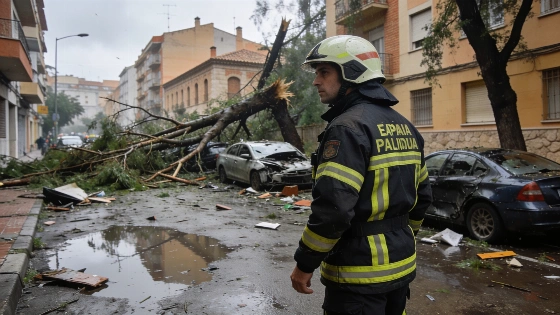
Violent storms disrupted the end of August in Spain, bringing hail and torrential rain as wind gusts of up to 140 km/h hit Catalonia and the Balearic Islands. In Tarragona, emergency services responded to more than 140 incidents. Reports included fallen trees and minor flooding, alongside damage to vehicles and street furniture. Images from the area circulated widely on social media.
Antena 3 reported that an Atlantic storm system crossing the peninsula met cold air, triggering a sudden shift from summer heat to autumn-like conditions. Temperatures fell by up to 10 degrees in some areas within 24 hours. Tarragona accounted for most emergency calls in Catalonia, where firefighters dealt with flooding and wind damage, particularly fallen branches and trees.
As the storm system moves east, meteorologists expect the heaviest rain and storms to subside. Strong showers may still affect northeast Galicia and Asturias, especially in the afternoon. Elsewhere in Spain, clearer skies and cooler mornings are forecast, but the respite will be brief. Temperatures are expected to rise again from Tuesday, with regions such as Cantabria and the Basque Country likely to see another day of southerly winds by midweek.
The Balearic Islands have also experienced rare weather phenomena. In Mallorca, several 'rissagas' or meteotsunamis were recorded in Alcúdia and Andratx, as well as Sóller and Port Adriano. In Port d'Alcúdia, a sudden surge of water reached seaside terraces, surprising pedestrians and customers. Menorca remained under alert for sea-level oscillations, while material damage mounted within just a few hours. For a broader look at how similar storm systems have affected Spain recently, see this recent report on widespread heavy rains and temperature drops.
Forecasts indicate that by the weekend, temperatures will return to more typical summer values across much of Spain. Late August and early September often bring sudden weather changes in Spain, as Atlantic systems interact with local conditions and raise the risk of heavy rainfall and localized flooding. Such episodes can disrupt daily life and damage infrastructure, prompting rapid responses from emergency services. Residents in affected regions are advised to follow official warnings and prepare for further weather shifts as the month ends.