Firefighters have stabilised six wildfires across Catalonia after a challenging day. Civil Protection ended lockdowns affecting 11,000 people. High temperatures and low humidity complicated the response.
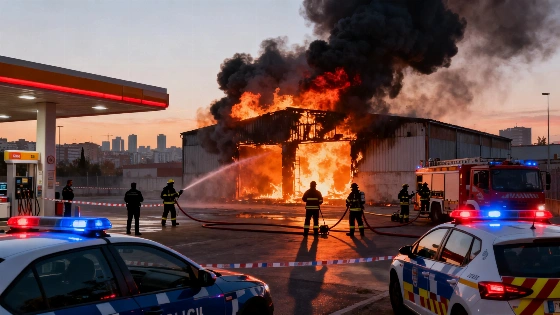
Six wildfires that erupted across Catalonia have now been stabilised, following a demanding day for emergency services marked by extreme heat and minimal humidity. The simultaneous outbreaks forced firefighters to deploy significant resources in multiple locations, with the most affected areas including Navarcles, Sentmenat, Anoia, Gavà, Aiguamúrcia and Guimerà.
In the province of Barcelona, the fires in Navarcles, Sentmenat, Anoia and Gavà were brought under control after extensive operations. Navarcles saw 19 firefighting units remain on site, while Sentmenat required 37 teams to continue extinguishing hotspots. Eight vehicles stayed in Anoia, and six units remained active in Gavà. In Tarragona, the fire in the Pla de Manlleu area of Aiguamúrcia was stabilised overnight, with 25 units still working in the area. Meanwhile, in Lleida’s Urgell region, the Guimerà fire was declared stabilised early Thursday, with 13 firefighting teams maintaining a presence.
Civil Protection lifted lockdowns late Wednesday in Sentmenat, Aiguamúrcia and Navarcles, which had affected around 11,000 residents. The last fire to be stabilised was in Guimerà, where the alert was raised at 20:48 on Wednesday after flames broke out in the Rabassoles area. Firefighters planned to inspect the perimeter on Thursday, focusing on a steep, hard-to-reach slope on the upper right flank.
Earlier, just after 22:00 on Wednesday, the Navarcles fire was stabilised. This incident had threatened an industrial estate and a recycling facility, prompting the temporary confinement of up to 9,000 people. The fire in Pla de Manlleu, Aiguamúrcia, which started after 16:00, was also stabilised overnight. Around 40 firefighting teams continued working through the night to extinguish hotspots and prevent flare-ups. Before the fire was stabilised, Civil Protection lifted restrictions for approximately 1,600 residents in Pontons, les Pinedes Altes de Montmell, Pla de Manlleu, and isolated homes in Aiguamúrcia and nearby areas.
Authorities have warned that high temperatures are expected to persist in the coming days, increasing the risk of new fires. The Interior Minister of the Generalitat, Núria Parlon, urged the public to exercise caution and avoid any activities that could trigger further incidents.
Wildfires are a recurring threat in Catalonia, particularly during periods of intense heat and drought. The region’s emergency services regularly prepare for such scenarios, coordinating with local authorities to implement rapid response measures and, when necessary, enforce temporary lockdowns to protect residents. The recent fires highlight the ongoing vulnerability of Mediterranean regions to climate-driven hazards and the importance of public cooperation during emergency situations. According to official data, the majority of wildfires in Spain occur between June and September, with Catalonia among the most affected autonomous communities. Preventive measures, such as restrictions on outdoor activities and increased surveillance, are often introduced during high-risk periods to reduce the likelihood of new outbreaks.