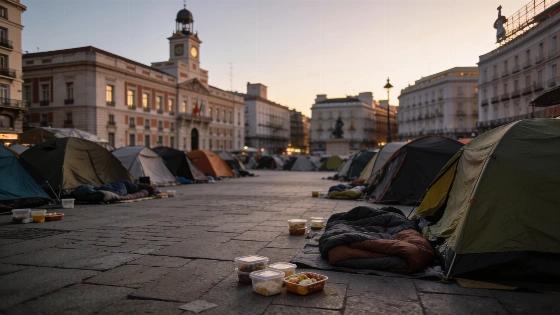
The manifesto argued that rights secured inside the camp would mean little if they depended on the encampment continuing to exist. Its authors said the mutual-support community they had built should not substitute for rights guaranteed beyond its boundaries.
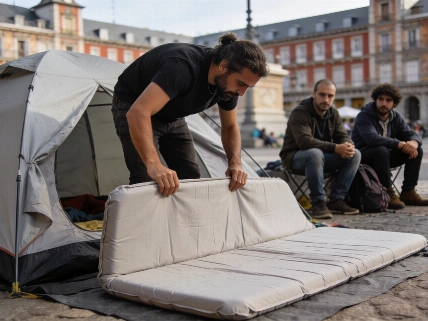
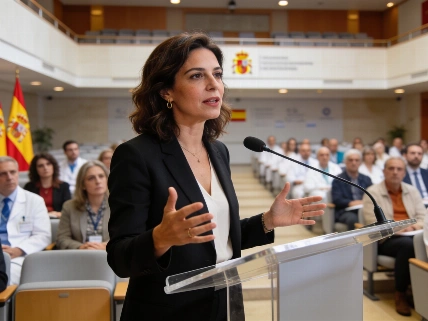
Four spokespeople read the agreed text after several days of discussion. Organizers identified the encampment as Acampada 26S. It began in Puerta del Sol on 26 September 2026 after the eviction of Maricarmen. The Sindicato de Inquilinas put up the first tents in the square. At the time, the camp was moving towards dissolution, but no departure date had been announced. By late October and early November, most commissions had said they would leave Puerta del Sol and move their organizing work to Madrid neighbourhoods. Preparations were also under way for a general strike planned for 11 November.
Housing was the first demand. The manifesto called for accessible social housing and described a wider change in social attitudes and material living conditions. It also criticised the economic and labour pressures that, it argued, made people’s lives more precarious. The encampment lasted more than a month, longer than the approximately 28-day 15M camp in Sol in 2011.
The text blamed large property owners for profiting from families losing their homes, and accused eviction companies and investment funds of doing the same, with institutional cooperation. It proposed reshaping neighbourhoods to encourage shared spaces. It also called for work to leave people time to live and spend time together.
The authors presented the demands as a collective commitment, drawing on earlier struggles and the rights won through them. They also extended their appeal to migrants, stating that no person is illegal. The campaign broadened beyond housing to address homelessness, migrant vulnerability, racism, gender violence and LGBTQ+ discrimination. RUSSPAIN.COM has separately reported on returns in Ceuta.
The manifesto also challenged the franchise and tourism-based business model, arguing for a more sustainable economy for residents. It described anxiety, depression and loneliness as symptoms of a violent system. The text called for an end to psychiatric abuse and forced medication.
For action beyond the camp, the group proposed using Puerta del Sol and other public squares for post-encampment meetings and assemblies. It pledged to keep opposing evictions and backed civil disobedience. The text said the 26S movement extended beyond the site and maintained international networks. As the withdrawal proceeded, the Madrid Government Delegation urged the encampment to end, saying a reasonable time had passed and the circumstances and demands of the protest had changed.
Dismantling the tents did not mean all participants considered the campaign over. At a public event on 1-2 November, about 200 supporters attended alongside a brass band. A spokesperson described the movement as undergoing an internal restructuring. Organizers said the shift from Sol to neighbourhood work was a move to continue the struggle beyond the square.