Spain’s government is tightening security at civil service exams, authorizing random checks and electronic detection tools. Candidates caught cheating or carrying unauthorized devices face immediate expulsion and possible criminal charges. The move follows recent suspicions of exam fraud.
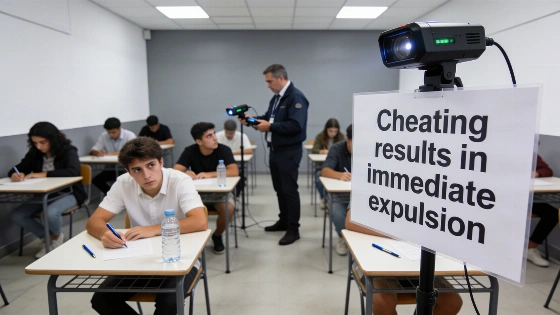
Spain’s civil service exams are entering a new era of scrutiny after the government authorized sweeping anti-fraud measures designed to stamp out cheating. Under a resolution issued by the Comisión Permanente de Selección, examiners now have the green light to use electronic detection systems and conduct random or systematic checks during all state selection tests.
Any candidate found with a mobile phone, smartwatch, tablet, or other electronic device—whether switched on or not—will be immediately expelled and barred from the selection process. The rules also extend to less obvious gadgets, including e-cigarettes and vape pens, which are now strictly forbidden in exam halls. If a device must be brought in for essential reasons, it must remain fully powered off, out of reach, and placed where instructed by exam staff. Simply activating airplane mode is not considered sufficient.
Electronic Surveillance and Random Checks
Selection boards and their assistants are now empowered to deploy a range of detection tools, from scanners to signal detectors, to uncover hidden devices. The resolution does not mandate a specific technology, nor does it require the use of signal jammers, but it does allow for any method capable of identifying unauthorized communication equipment. This includes tools that can spot phones, earpieces, or other systems used to receive answers from outside the exam room.
On each candidate’s desk, only a physical ID, a transparent blue or black pen, and a small clear water bottle without a label are permitted. Earplugs are banned, while hearing aids or other medical supports require official documentation. Any attempt to copy, use deceit, or operate an electronic device—regardless of whether it is physically on the candidate—will result in immediate removal from the exam and exclusion from the process. Officials are required to document the incident and may refer it to law enforcement if criminal liability is suspected. However, not every case of copying will automatically be treated as a crime; the final assessment rests with the relevant authorities.
Response to Recent Exam Scandals
The crackdown comes in the wake of controversy surrounding the September 2025 administrative exams for Spain’s Social Security offices in A Coruña. Half of the top 50 scores nationwide were achieved at this single site, despite it accounting for only a fraction of total candidates. The Ministry of Inclusion launched an internal investigation and referred the matter to the public prosecutor after detecting possible criminal irregularities. Authorities are examining whether electronic devices were used to transmit answers during the test, but no formal responsibility has been assigned pending the outcome of the judicial process.
Spain’s move to tighten exam security reflects a broader European trend toward stricter enforcement of rules in public processes. As seen in other areas—such as the EU’s push for cross-border traffic penalties, recently covered in our report on new digital driving licence reforms—the focus is increasingly on transparency, accountability, and the use of technology to prevent fraud.
For candidates, the message is clear: any attempt to cheat, especially through electronic means, now carries not just the risk of disqualification but also potential criminal consequences. The government’s approach signals a determination to restore trust in public recruitment and ensure that merit, not manipulation, determines who enters Spain’s civil service.