Civil Guard Launches 30 New Motorcycles for Undercover Road Monitoring. The Civil Guard steps up monitoring of motorcyclists: 30 new unmarked motorcycles are hitting the roads. Offenders will now be stopped and fined on the spot. The measure affects almost all regions of the country.
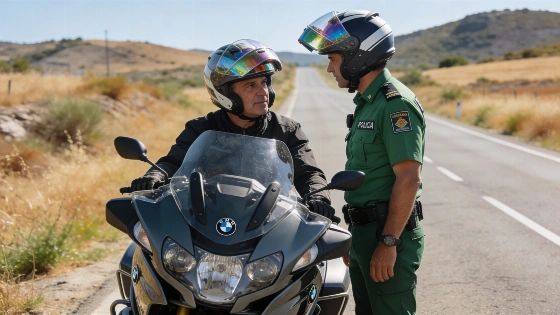
A new wave of motorcycle control has begun in Spain: the Civil Guard has deployed 30 unmarked motorcycles on the roads to detect violations. These new vehicles will operate in regions with the highest concentration of motorcycles to record such offenses as driving into oncoming traffic or using uncertified parts. Inspectors will not only patrol in plain clothes but will also personally stop violators in uniform and issue fines on the spot.
Previously, the process was different: officers on unmarked motorcycles reported violations to colleagues in patrol cars, who then stopped the driver. Now the procedure is more direct and faster. According to the Civil Guard, the decision to purchase new motorcycles is linked to the increase in accidents involving motorcyclists: although motorcycles make up only 16% of the vehicle fleet, they account for a quarter of all road deaths in the country.
The procurement of new motorcycles took place through an open tender, in which offers from various manufacturers were considered. Ultimately, large-displacement BMWs were chosen: the German company offered the most attractive terms, lowering the price of each unit by thousands of euros compared to competitors. The motorcycles arrived in different colors so as not to stand out in regular traffic. Previously, covert monitoring using motorcycles was used only in certain regions—Canary Islands, Castile and León, Galicia, Valencia, Andalusia, and the Balearic Islands. Now, the practice will expand to almost the entire country, except for Catalonia, Navarre, and the Basque Country, where road control is managed by local authorities.
According to the Civil Guard, the main cause of accidents among motorcyclists is leaving the roadway, and three quarters of incidents occur on regular single-direction roads. Over the last ten years, the number of motorcycle accidents has increased by 44%. On weekends and holidays, special warnings for motorcyclists have already appeared on road information boards, for example: “Motorista, te queremos de vuelta” and “Uno de cada cuatro fallecidos son motoristas.” According to the DGT, the typical motorcycle accident victim is a man aged 45–54 who returns to riding after a long break. Often these riders buy powerful motorcycles without having enough experience to handle them.
For reference: Spain is among the EU countries with the most active motorcycle market, especially in the southern and coastal regions. In recent years, authorities have tightened control over two-wheeled vehicles due to an increase in accidents and fatalities. The introduction of unmarked patrols is part of a comprehensive strategy to reduce accidents and improve road discipline.