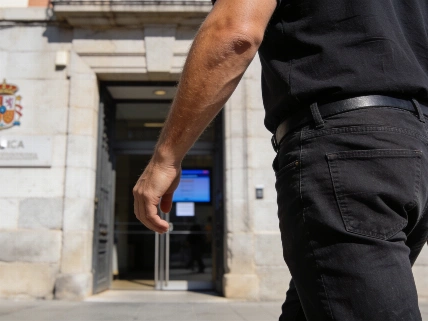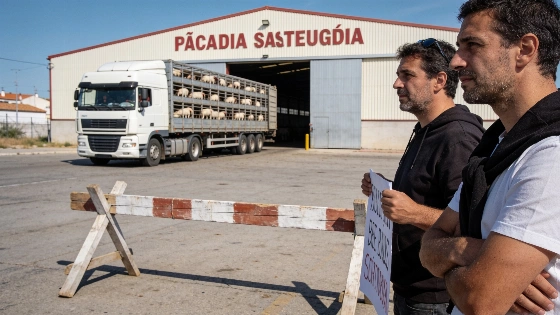
Barricades and pickets at major slaughterhouse entrances in Catalonia and Aragon blocked livestock lorries as the meat-sector strike began on Monday 9 November. The national stoppage is scheduled to run until 13 November, with about 126,000 workers at slaughterhouses and meat-processing plants called out. The five-day action follows a deadlock over the national collective agreement, with unions seeking higher wages and improved working conditions. It also covers cutting plants, facilities producing cured meat and sausage, and auxiliary veterinary-inspection services.
The disruption comes alongside a separate series of rail stoppages. The Sindicato Español de Maquinistas Ferroviarios (Semaf) has called Renfe train crews out for 24 hours on Tuesday 10 November, with the action ending at 23:59. A second strike on Thursday 12 November is set to run in three periods, from 06:20 to 09:20, 14:20 to 17:20, and 21:20 to 23:20. In Catalonia, the government set minimum service levels for Rodalies and regional passenger trains operated by Grupo Renfe at 66% of normal service during peak hours and 33% for the rest of the day on 10 and 12 November. The requirements appeared in the Official Gazette of Catalonia on 5 November under order EMT/219/2026.
A nationwide 24-hour general strike is scheduled for Wednesday 11 November, with demands over housing prices and higher wages. The rail schedule continues on 17 November, when a separate 24-hour railway strike is planned across Adif and Grupo Renfe. Semaf has also called conductors at eight operators to join, including staff at Ouigo and Iryo. The broader call includes drivers at Renfe, Iryo, Transfesa, Continental Rail, Tracción Rail, Captrain and Medway, bringing passenger and freight operators into the action. A railway-sector demonstration is scheduled outside the Congreso de los Diputados on 16 November.
The Ministry of Transport has set minimum services of around 72% to 75% at peak times for commercial trains and Cercanías services. Renfe said on its official X account that passengers can change or cancel any train free of charge, including services covered by the minimum-service rules. The company said it would contact affected passengers by SMS or email using the details on their booking.
The railway actions follow the accident at Urda, after earlier accidents at Adamuz and Gelida. The BBC reported that a Renfe train struck the rear of a stationary train operated by Iryo near Urda, about 130 kilometres south of Madrid. The Urda crash prompted an EU fraud inquiry, the second such inquiry into Spain’s railways in 2026. In January, 46 people were killed in the Adamuz accident. Semaf says it is striking in response to what it describes as a failure to honour commitments to make structural changes to rail safety. The disputes also concern staffing levels at Adif’s Centros de Regulación de la Circulación (CRC).
The dispute follows an agreement dated 9 February 2026 involving Semaf, the Ministry of Transport, Renfe and Adif. It set up working groups to review safety procedures and develop new operating rules. The Catalan government said Semaf believes the commitments have not been implemented sufficiently and negotiations have not resumed. The Sindicato de Circulación Ferroviario (SCF) has called separate 24-hour stoppages at Adif for 17 and 19 November. The union cites a lack of staff at the CRC and technical instructions affecting railway safety among its concerns; talks at the Comisión de Conflictos ended without agreement.
In the meat sector, CCOO, UGT and USO called the strike after talks with employers ANICE and FECIC over a collective agreement failed. Workers are seeking a pay rise of at least 4% with an IPC-linked review clause, a shorter annual working schedule and tighter controls on work pace. Union activity was reported during the first hours of the stoppage at Litera Meat and Fribin, two major facilities in Binéfar, Huesca. Employers have warned of possible supply problems and filed a complaint against the unions with the Audiencia Nacional.