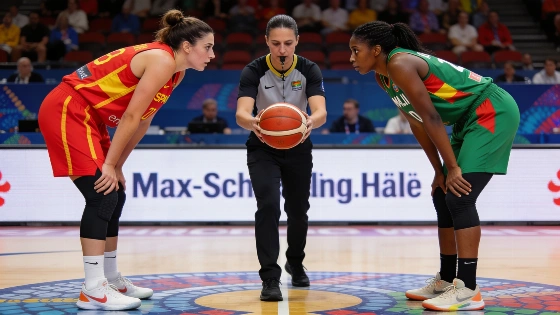
Spain arrives at Berlin’s Max-Schmeling-Halle after a big win over Germany, with little time to recover. Just 16 hours after beating the host nation, the Spanish team faces Mali in a group-stage match that could upend early expectations for the 2026 Women's World Cup.
The tight schedule is hard to ignore. Spain has barely had time to rest, while Mali comes in fresher after nearly a full day off following its opener. That gap could affect the pace and energy on the court, especially as the tournament wears on. FIBA lists this as a group-stage game of the FIBA Women’s Basketball World Cup 2026, set for September 5 at 11:30 a.m. local time in Berlin. Despite some confusion, this is basketball, not football.
In their last pre-tournament meeting, Spain convincingly beat Mali 97:58 in Zaragoza, with every Spanish player scoring.
Both teams have named their starters. Mali opens with Haidara, Doumbia, Koné, Dembele, and N'Diaye. Spain counters with Cazorla, Conde, Carrera, Fam, and Martín. Officials Woolcock, Husainy, and Davidson reflect the event’s international stage.
Mali lost to Japan by just five points in a high-scoring game, while Spain dominated Germany. Those results set up a match with no guaranteed outcome. Group A’s standings remain wide open, and a single loss could change the outlook for either team. FIBA lists Mali at 0-1 with a -5 point differential after its 97-102 loss to Japan; Spain comes in after an 83-53 win over Germany.
Tip-off is at 11:30 a.m. Spanish time. The arena is ready, and the teams are on the floor. A win would strengthen Spain’s position, but any sign of fatigue could give Mali a real opening. Managing the schedule will matter as much as skill in this game.
Group A is one of the tournament’s most competitive, featuring Japan (FIBA ranking 10), Spain (6), Germany (11), and Mali (18). The close ranking spread makes Spain a favorite on paper, but every team in the group could challenge for a playoff spot.
For those following Spain’s recent sports results, this World Cup match carries the unpredictability seen in other competitions. As reported earlier, tactical choices and outside pressures can shake even established lineups, making every game a potential turning point.
Spain’s challenge is physical as well as tactical. The short turnaround tests the team’s depth and focus. Mali has already shown it can push top teams. The result in Berlin will affect the group standings and could show which squad is better prepared for the demands of a world championship.
Scheduling gaps like this are common in international women’s basketball, but their effects often go overlooked. How Spain handles the quick recovery will draw close attention. If the team maintains its intensity, it will confirm its status as a contender. If not, Mali could capitalize and shake up the group. The next two hours on the court will provide answers that no preview could predict.