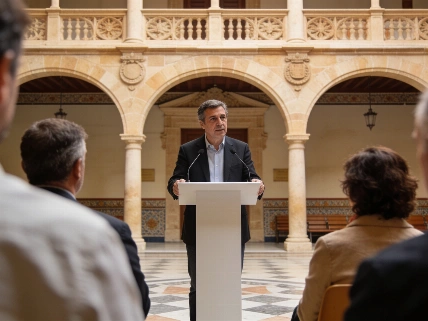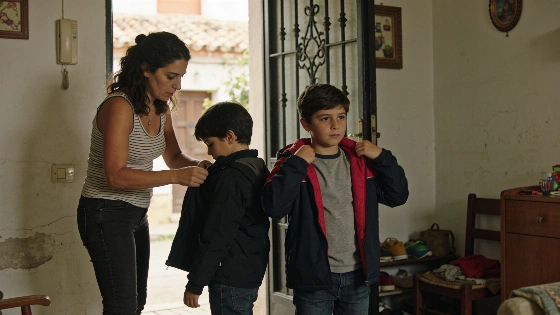
Families headed by one mother with two or more children will receive the same annual tax deduction as large families: €1,200, equivalent to €100 a month. On 10 November 2026, the Council of Ministers approved a royal decree-law creating an official state title for single-parent households, including both monoparental and specifically female-headed monomarental families. The measure establishes nationwide recognition in an area where titles and benefits had previously varied among Spain’s autonomous communities. Government sources said the policy recognizes the special vulnerability of these households. Social Rights Minister Pablo Bustinduy had called it one of the legislature’s major objectives. The decree-law still requires validation by Congress, or by the Permanent Deputation when Parliament is not sitting, to remain in force. Government spokeswoman Elma Saiz described the measure at the post-Council news conference as one of justice.
The category covers households with one parent, as well as cases where only one parent effectively has custody. The decree cites separations without child maintenance and prolonged absences as examples. It also cites gender-based violence. The state certificate will provide access to specific protections in employment and education, along with aid and scholarships. Exemptions and discounts will also apply to public transport and social services. Cultural, sporting and leisure services will be covered too.
The measures also change the threshold for large-family status. A family will qualify for the special category with four children instead of five; families with three children will qualify if annual income is below €63,000. In shared-custody cases, both parents may retain a title. The government estimates these changes will benefit more than 330,000 families. The broader package also protects single-parent households and low-income large families. It covers families with a parent with a disability as well. The government estimates an annual impact of about €820 million, reaching more than 760,000 households and nearly three million people.
Families with two or more children will also receive equivalent status if one parent has a disability of at least 33%. The government estimates this provision will reach more than 100,000 families and 385,000 people. A single-parent household in which the parent has a qualifying disability and cares for two children can receive the special-category large-family classification. The state’s role in regional policy has also featured in transfer talks with Galicia.
A separate decree targets the dependency system. The agreed funding has a €904 million allocation, while the state’s contribution is due to reach €7.24 billion in 2027. The announced additional investment for the period from mid-2026 to 2027 is €6.2 billion. It is aimed at meeting the commitment for the state to cover half the system’s total cost.
The changes make telecare universal, with technology intended to prevent and detect involuntary loneliness. Home-help services may be delivered outside the home, and several people may share benefits, an option described as particularly useful in rural areas. The maximum time to decide benefit applications falls from six months to three.
Saiz said the system had 385,000 more people receiving support than in December 2023, while its waiting list had fallen by 81,000. The stated goal is to eliminate the queue by the end of 2027.
The Council also approved €88.7 million in aid for areas affected by DANA Adam, especially the Valencian Community. The package includes agricultural support and tax measures for those affected. It also offers help for businesses in commerce, tourism and hospitality. The measures provide for repairs to irrigation systems and rural roads, direct aid through agricultural insurance and an ICO financing line.