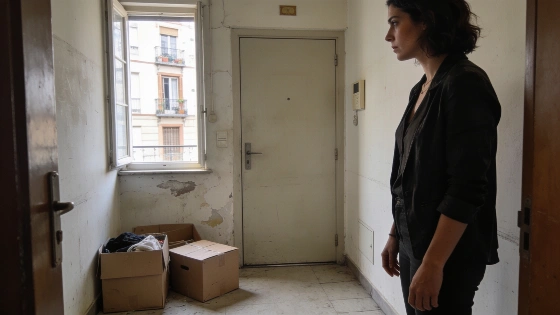
More than 272000 families have been evicted in Spain since 2018. Rental arrears account for most cases, and courts may now resume launches after legal protections ended.
Spanish courts and police carried out 272417 evictions after Pedro Sánchez reached Moncloa in mid-2018. That works out to roughly 90 families removed each day. The figures have pushed the housing crisis back to the centre of Spain's political debate. Reuters reported that the case of 87-year-old Maricarmen Abascal, who was removed from her rented home in central Madrid on 23 September 2026, sparked mass protests and became a new symbol of the crisis.
The pressure is expected to grow. Anti-eviction measures ended in 2026, allowing courts to resume launches that had been suspended when tenants or owners claimed vulnerability. First-quarter figures already show how much work is returning to the courts.
Spain recorded 4,005 eviction launches in the first quarter of 2026, according to figures from the Consejo General del Poder Judicial cited in reporting on the latest housing crisis.
Most cases involved rented homes. Data from the Consejo General del Poder Judicial show more than 191000 launches linked to breaches of the Ley de Arrendamientos Urbanos since 2018. Mortgage-related evictions reached 63272 during the same period. Reporting on the 2025 CGPJ statistics also found that rental cases made up most of the 24540 launches recorded that year.
The yearly figures do not show a steady rise. They generally fell from the peak of 54006 launches in 2019. The decline did not come from stronger economic growth or better housing conditions. It followed a series of legal protections that delayed the removals.
The first major suspension came in 2020 through royal decree-laws adopted during the Covid pandemic. The measures temporarily halted launches linked to unpaid rent and certain occupations when the people affected were considered vulnerable. The protections were extended several times as part of the social shield.
The central government said the property owner had declined repeated attempts to resolve the dispute through negotiations. BBC reporting also noted that the government criticized the way the eviction itself was carried out, adding political pressure after the Madrid protests.
The rules changed at the start of 2026, when Congress repealed decree-law 2/2026. That measure had included the automatic suspension of evictions. Courts are now returning to cases that had been held back. The backlog could push the figures higher in the next quarters.
In 2025, judges and police carried out 24540 evictions. Cataluña recorded the most, followed by Madrid, the Comunidad Valenciana and Andalucía. Spanish courts also received 31416 mortgage foreclosure proceedings that year. It was the highest figure since Sánchez took office and the highest recorded since 2016. In the first quarter of 2026, reporting based on CGPJ data placed Cataluña first for completed launches, followed by the Comunidad Valenciana, Andalucía and Madrid.
Mortgage foreclosure proceedings rose by 18.3% in 2024 and by 35.5% in 2025. The increase is concentrated in habitual homes owned by individuals. Cases involving those homes are now at their highest level during the current government's period.
The dispute is no longer only about the number of completed evictions. The bigger question is whether suspensions have simply pushed the pressure into the future. An earlier housing analysis fits a wider pattern: unresolved social pressure reaches national politics when institutions can no longer delay its practical effects.
Sumar is pressing for a new royal decree-law to extend the protections. The proposal resembles a measure defeated before the summer. It remains a political effort, not an enacted rule. Housing-sector representatives say repeated delays leave vulnerable tenants and owners without a workable solution. After the Maricarmen case, the government also promised to speed up a new housing decree and respond urgently. It described the situation as an unacceptable social tragedy.
The policy choice is getting sharper. Vulnerable households need protection. But an indefinite suspension of launches can push owners out of the rental market and make mortgage access harder. The figures support a clear conclusion: delaying evictions without expanding a lasting housing response does not solve the problem. It pushes the pressure forward until courts and families face it at the same time.